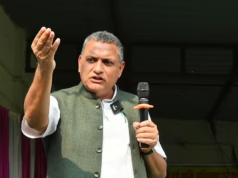



Pannun has however filed several petitions urging the court to issue summons to India’s National Security Advisor and former R&AW chief. He had unsuccessfully tried to serve a notice on NSA Doval in Washington when he accompanied PM Modi on a bilateral visit.
U.S. District Judge Katherine Polk Failla this week directed Mr. Pannun to prepare documents on or before 30 November, including the summons addressed to the Indian officials, the route by which the summons would be issued, as well as records of previous attempts at serving the two officials under the Hague Convention.
Significantly, however, Judge Katherine Polk Failla appears to have accepted Pannun’s argument that Article 19 of the Convention, read with provisions of India’s Code of Civil Procedure, may permit service of notices through Indian courts, rather than exclusively through the central authority, the ministry of law and justice. The judge is exploring if the union ministry of law and justice the only route through which notices can be served.
The order means Pannun’s civil lawsuit remains alive and has overcome a procedural obstacle. India will have to decide whether to ignore the proceedings, challenge the court’s jurisdiction, or make a limited appearance.
The FBI’s criminal prosecution of Nikhil Gupta remains the more important legal development and the sentencing on 20 November may have a bearing on Pannun’s claim for damages in his civil lawsuit.