


Brazil has achieved its best-ever result in the Blue Flag programme, one of the world’s most respected sustainability certifications: 75 beaches and marinas have been certified for the 2026/2027 season, a 25% increase from the 60 locations recognised in the previous edition.
The achievement reinforces Brazil’s leadership in South America and its second-place position across the Americas. For travellers dreaming of idyllic beaches, the expanded network offers more destinations where enjoying nature goes hand in hand with protecting it.
Spread across seven states, the certified locations include 63 beaches and 12 marinas.
Coordinated internationally by the Foundation for Environmental Education (FEE), the programme requires compliance with standards for water quality, environmental management, education, infrastructure and visitor safety. In practice, these standards translate into regular water testing, waste management, educational activities and the maintenance of visitor services.
“Brazilian beaches are among the most extraordinary in the world, with crystal-clear waters, natural pools and a diversity of landscapes that few destinations can match. This natural heritage, together with our culture, cuisine and hospitality, makes the sun-and-beach experience in Brazil even more complete. Recognition of our beaches’ quality strengthens the country’s competitiveness in the international market and shows that Brazil is increasingly prepared to attract travellers seeking clear waters, protected nature and unique experiences”, said Bruno Reis, president of Embratur/Visit Brasil.
To earn the certification, applications undergo national and international assessments as well as inspection visits. Embratur serves on the national jury, while the final decision rests with the international jury, which includes representatives and experts from institutions such as UN Tourism, UNESCO, the United Nations Environment Programme (UNEP), ICLEI, the International Union for Conservation of Nature (IUCN) and the World Cetacean Alliance, among others.
As it celebrates 20 years of operations in Brazil, the Blue Flag programme will hold its national awards ceremony on November 6th at the Santa Catarina Yacht Club in Florianópolis, Santa Catarina.
“The international jury’s confirmation of the 75 applications highlights the programme’s progress in Brazil and destinations’ commitment to integrating sustainability, safety and environmental quality standards into their management. The network’s growth also extends the reach of these practices to different regions of the country”, said Leana Bernardi, national coordinator of the Blue Flag programme in Brazil.
BEACHES WITH HISTORY AND NEW DESTINATIONS ON THE LIST
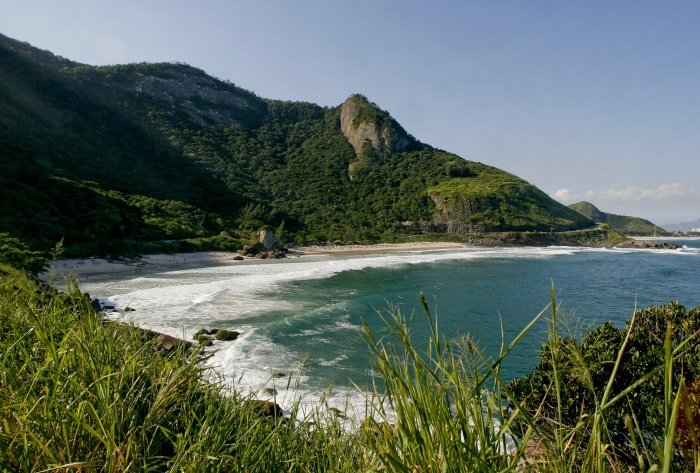
The five Brazilian beaches with the most awards in the programme’s history are among those certified for 2026/2027. Tombo Beach in Guarujá, São Paulo, leads with 17 consecutive certifications, followed by Prainha in Rio de Janeiro with 14 awards. Both attract surfers and stand out for their scenery, where the ocean meets vegetation-covered hillsides.
With 11 recognitions each, the group also includes Ponta de Nossa Senhora de Guadalupe in Salvador, Bahia; Lagoa do Peri Beach in Florianópolis; and Praia Grande in Governador Celso Ramos, both in Santa Catarina.
Among the newcomers, Florianópolis now has three newly certified beaches: Daniela, Açores and Moçambique. Also joining the list in Santa Catarina are Itapema do Norte, along the Beira Mar III section in Itapoá; Molhe in São Francisco do Sul; and Mar Grosso in Laguna. The latter is the first beach on Santa Catarina’s southern coast to receive the Blue Flag distinction.
Along the Rio de Janeiro coastline, the network welcomes Caravelas in Armação dos Búzios; Pontal, along the Vila Industrial section in Arraial do Cabo; and Gravatá in Saquarema. In the Northeast, Lage Beach makes its debut in Porto de Pedras, Alagoas, where Patacho receives its sixth consecutive award. The Bahia beaches of Caribinho and Genipabu bring the number of certified beaches in Camaçari to four. Santo Antônio in Mata de São João also receives the distinction for the first time.
In the national ranking, Santa Catarina leads with 38 certified locations, followed by Rio de Janeiro (20), Bahia (7), São Paulo (5) and Alagoas (3). Ceará and Paraná round out the list with one recognised location each. Among municipalities, São Francisco do Sul and Bombinhas, both in Santa Catarina, stand out with six and five award-winning beaches, respectively. This concentration makes it possible for visitors to include several of them in a single itinerary along the southern coast.
CONSERVATION AND THE TRAVEL EXPERIENCE
The expansion of the Blue Flag network aligns with Plan Brasis — the International Tourism Marketing Plan 2025–2027 — which aims to promote Brazil as a diverse and sustainable destination. Developed by Embratur in partnership with Sebrae Nacional and the Getulio Vargas Foundation (FGV), the strategy sets the direction for promoting Brazil abroad.
For travellers, award-winning beaches can also serve as a starting point for discovering local culture and everyday life. In Salvador, a day at Ilha dos Frades can be paired with visits to the city’s historic heritage sites. In Laguna, Mar Grosso Beach shares the spotlight with the historic downtown area. Between excursions, local cuisine and interactions with residents help reveal what makes each destination unique.
Below is the complete list of beaches and marinas certified for 2026/2027:
BEACHES
Praia da Lage – Porto de Pedras (Alagoas)
Praia do Patacho – Porto de Pedras (Alagoas)
Praia do Caribinho, Guarajuba – Camaçari (Bahia)
Praia de Genipabu, Guarajuba – Camaçari (Bahia)
Praia do Paraíso, Guarajuba – Camaçari (Bahia)
Praia da Espera, Itacimirim – Camaçari (Bahia)
Praia de Santo Antônio – Mata de São João (Bahia)
Praia da Viração, Ilha dos Frades – Salvador (Bahia)
Ponta de Nossa Senhora de Guadalupe, Ilha dos Frades – Salvador (Bahia)
Praia do Cumbuco – Caucaia (Ceará)
Praia da Azeda-Azedinha – Armação dos Búzios (Rio de Janeiro)
Praia das Caravelas – Armação dos Búzios (Rio de Janeiro)
Praia do Forno – Armação dos Búzios (Rio de Janeiro)
Praia José Gonçalves – Armação dos Búzios (Rio de Janeiro)
Praia de Tucuns, section Parque das Dunas – Armação dos Búzios (Rio de Janeiro)
Praia do Pontal, section Vila Industrial – Arraial do Cabo (Rio de Janeiro)
Praia Lagunar Caiçara – Arraial do Cabo (Rio de Janeiro)
Praia do Foguete, section opposite Lagoa das Garças – Cabo Frio (Rio de Janeiro)
Praia do Peró – Cabo Frio (Rio de Janeiro)
Praia de Cidade Nova – Iguaba Grande (Rio de Janeiro)
Praia de Ubás – Iguaba Grande (Rio de Janeiro)
Praia do Sossego – Niterói (Rio de Janeiro)
Prainha – Rio de Janeiro (Rio de Janeiro)
Praia de Grumari, section central – Rio de Janeiro (Rio de Janeiro)
Praia das Pedras de Sapiatiba – São Pedro da Aldeia (Rio de Janeiro)
Praia da Vila, section Canto da Vila – Saquarema (Rio de Janeiro)
Praia de Itaúna, section Pedras de Itaúna – Saquarema (Rio de Janeiro)
Praia do Gravatá – Saquarema (Rio de Janeiro)
Prainha – Saquarema (Rio de Janeiro)
Praia do Estaleirinho – Balneário Camboriú (Santa Catarina)
Praia do Estaleiro – Balneário Camboriú (Santa Catarina)
Praia de Taquaras – Balneário Camboriú (Santa Catarina)
Praia Central – Balneário Piçarras (Santa Catarina)
Praia da Barra do Rio Piçarras – Balneário Piçarras (Santa Catarina)
Praia de Piçarras – Balneário Piçarras (Santa Catarina)
Praia da Ponta do Jacques – Balneário Piçarras (Santa Catarina)
Praia do Cerro – Barra Velha (Santa Catarina)
Praia da Conceição – Bombinhas (Santa Catarina)
Praia de Quatro Ilhas – Bombinhas (Santa Catarina)
Praia da Tainha – Bombinhas (Santa Catarina)
Praia de Mariscal – Bombinhas (Santa Catarina)
Prainha de Mariscal – Bombinhas (Santa Catarina)
Praia da Daniela – Florianópolis (Santa Catarina)
Praia da Lagoa do Peri – Florianópolis (Santa Catarina)
Praia do Moçambique – Florianópolis (Santa Catarina)
Praia dos Açores – Florianópolis (Santa Catarina)
Praia das Cordas – Governador Celso Ramos (Santa Catarina)
Praia Grande – Governador Celso Ramos (Santa Catarina)
Prainha de Itá – Itá (Santa Catarina)
Praia dos Molhes do Atalaia – Itajaí (Santa Catarina)
Praia de Itapema do Norte, section Beira Mar III – Itapoá (Santa Catarina)
Praia do Mar Grosso – Laguna (Santa Catarina)
Praia da Bacia da Vovó – Penha (Santa Catarina)
Praia da Saudade – Penha (Santa Catarina)
Praia Grande – Penha (Santa Catarina)
Praia Vermelha – Penha (Santa Catarina)
Praia de Ubatuba – São Francisco do Sul (Santa Catarina)
Praia do Ervino – São Francisco do Sul (Santa Catarina)
Praia do Molhe – São Francisco do Sul (Santa Catarina)
Praia do Forte – São Francisco do Sul (Santa Catarina)
Praia Grande – São Francisco do Sul (Santa Catarina)
Prainha (Praia da Saudade) – São Francisco do Sul (Santa Catarina)
Praia do Tombo – Guarujá (São Paulo)
MARINAS
Stella Marina – Barra de São Miguel (Alagoas)
Iate Clube de Caiobá – Guaratuba (Paraná)
Marina Costabella – Angra dos Reis (Rio de Janeiro)
Tedesco Marina – Balneário Camboriú (Santa Catarina)
Iate Clube de Santa Catarina – Florianópolis (Santa Catarina)
Marina da Conceição – Florianópolis (Santa Catarina)
Marina Itajaí – Itajaí (Santa Catarina)
Marina VillaReal – São Francisco do Sul (Santa Catarina)
Iate Clube de Santos, Guarujá branch – Guarujá (São Paulo)
Associação Náutica Barreiros – Ilhabela (São Paulo)
Marina Kauai – Ubatuba (São Paulo)
Voga Marine – Ubatuba (São Paulo)