

While speaking at the session titled ‘Chokepoints and Shockwaves: Securing the Arteries of Global Trade’ at ORF’s Sagarmanthan: The Great Ocean dialogue, Saudi Arabia’s top port official called for the creation of ‘more Imecs’
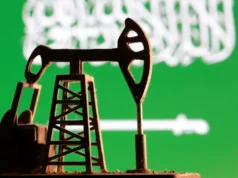
With the US-Iran military conflict now turning into a Houthi-Saudi Arabia military clash, Riyadh is rallying around the trade route idea India has proposed as a long-term solution to fix the supply chain vulnerabilities. The Saudi Ports Authority’s top executive has said that though the country’s allies are “not afraid” of facing the security threats posed by Yemen-based rebel group Ansar Allah, commonly known as the Houthis, Riyadh realises the “need to build more Imecs [India-Middle East-Europe Economic Corridor]”.
Suliman Almazroua, the Saudi Ports Authority president, said the supply chain is not just about “cheap and shortest routes. It’s about building resilience, and the cost to survive is at stake sometimes”. The Saudi delegate’s remarks came during a panel discussion titled “Chokepoints and Shockwaves: Securing the Arteries of Global Trade” at ORF’s Sagarmanthan: The Great Ocean dialogue.
With the ongoing West Asia tensions impacting the regional and global economy adversely, Almazroua underscored that there”were a lot of learnings” over the past few months. He said that Saudi Arabia is focusing on three fundamentals to ensure resilience in the maritime sectors.
“Firstly, who we are serving. Secondly, partnership, whether it is strategic or transactional. Because in transactional ties, you win in good times and lose in bad times. And thirdly, commitments such as commercial commitments, friendship commitments and humanity commitments.”
 More from World
Almazroua emphasised that Saudi Arabia’s partnerships with other nations are so strong that they are “not afraid of the Houthis”.
“They trust the system, they trust us. That’s how partnerships should be,” he said. The panel discussed how to ensure resilience and continuity of global flows, which requires stronger risk management, diversified trade routes, and deeper international cooperation. The session also explored how geopolitical tensions, economic dependencies and emerging alternative corridors are reshaping the future of maritime security, energy flows and global trade resilience.
‘The existing maritime situation is resilient’
Participating in the discussion, the Egyptian Centre for Economic Studies executive director Abla Abdel-Latif said the existing maritime situation is “very resilient when it comes to addressing the present situation”.
“I don’t think the talks should be about changing the entire mechanism; it should be about facilitating the integration.” She argued that “by focusing on resilience, economic efficiency is being put aside”.
“It has to be well studied and operational. Separating resilience from economic efficiency is not the right way to go since we are dealing with a garbage can of geopolitical conflicts. We cannot look at one side only and not look at the other side,” she said.
Image Source: Firstpost
Latif linked the ongoing West Asia crisis to the “core” issue of the neglect of the rights of the Palestinians. “Corridors are not only about shipping business. It’s the whole life. And these factors are important to consider to building a strong framework,” she said, adding that communication is limited, and this is something that needs improvement.
‘We need many Imecs’
Almazroua said, “We need more Imec. We need such corridors to build resilience. We need more connectivity, and we need to work together. “International waterways should not be controlled, and anyone who tries to control them needs to be stopped. This is a criminal act.”
Latif said that while Imec initially started as a very “politically straight line. It has changed over time and is being looked at intelligently as a network.” Jonathan D Caverley, Senior Fellow at the International Institute for Strategic Studies in the United States agreed with Almazroua’s assertion and said: “If you turn the Gulf into a no-man’s-land sea. Then you are essentially heading to economic destruction.”
Shubhransh Srivastav, Senior Vice President, Corporate Affairs & Security, SCO, DP World, United Arab Emirates, cited the Global Trade Observatory report to back the idea. He said that 84 per cent looked at resilience and functionality over cost, and 80 per cent also looked at alternate routes. He maintained that developing alternative corridors like the Imec is crucial in the current climate.
Is the US deciding which waterways to prioritise?
As the Donald Trump administration appears to maximise its influence over maritime dynamics, Caverley responded affirmatively. He also noted that while ongoing tensions in West Asia had an economic impact, the international maritime corridors are resilient enough to deal with it.
“I don’t want to minimise the economic cost of the current crisis. But even with the blockade of the Strait of Hormuz, the global oil price rise average is the same as it was in the 1970s,” he said.
However, Caverley said that despite tensions, “we live in the golden age of maritime commerce. The world has never been more equipped to handle maritime crisis”.
He noted that the United States has changed its approach in the past couple of years. Caverley said that, with growing pressure in places such as Panama, Taiwan, the Pacific, the Baltic Sea and West Asia, the rest of the world has to create resilience.