
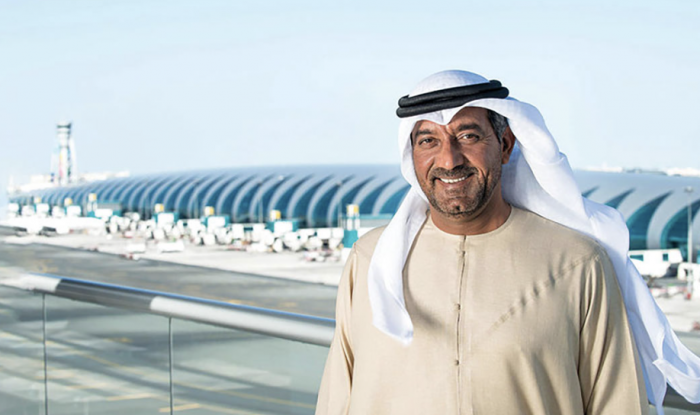


There are airline leaders, airport leaders and destination leaders. Sheikh Ahmed bin Saeed Al Maktoum has spent much of his career operating across all three categories at once. As chairman and chief executive of Emirates Airline and Group, chairman of Dubai Airports and chairman of flydubai, he sits at the junction where Dubai’s aviation capacity, network reach and visitor economy meet.
That position was not created overnight. Sheikh Ahmed began his aviation career in 1985, the year Emirates launched. The assignment was audacious: build an international airline for a city that wanted to become a global trading and tourism hub, but did not yet possess the scale, connectivity or visitor infrastructure associated with one. Emirates grew by making Dubai the connecting point, using widebody aircraft, long-haul routes and a service proposition that promoted the city every time the airline entered a new market.
The model became one of modern aviation’s most consequential growth stories. By March 2026, Emirates served 152 cities in 80 countries with a fleet built around long-range aircraft. In the 2025-26 financial year, Emirates Group reported revenue of about $41 billion and pre-tax profit of $6.6 billion. It also invested $4.9 billion across aircraft, products, technology and infrastructure. The numbers matter because they show that Sheikh Ahmed’s strategy is no longer simply about network expansion. It is about renewing a mature global platform while protecting its economics.
That renewal is visible in the airline’s multibillion-dollar aircraft retrofit programme, its expansion of premium economy and its continuing investment in digital service. It is also visible on the ground. In May 2026, Emirates broke ground on a $5.1 billion engineering and maintenance complex at Dubai South. Designed to support the airline’s growing fleet and third-party customers, the project is an industrial statement as much as an airline investment. It seeks to retain more aviation capability, skilled employment and supply-chain value in Dubai.
Sheikh Ahmed’s wider portfolio explains why this matters to tourism. Dubai International has become the world’s leading airport for international passenger traffic, while Al Maktoum International is intended to support the emirate’s next era of growth. Emirates, flydubai and the airport system do more than transport visitors. Together they give Dubai the route density, schedule choice and stopover potential that hotels, attractions, events and cruise operators convert into demand.
The leadership style behind that platform has been strikingly consistent. Sheikh Ahmed has favoured long investment horizons, commercially run government-backed enterprises and coordination between aviation and destination development. Emirates has remained focused on international traffic rather than building a domestic network. Dubai Airports has continued to add capacity while preparing for a much larger future hub. flydubai has complemented Emirates by opening thinner routes and regional markets. Each component has a distinct commercial role, but the combined effect is greater connectivity for Dubai.
The next chapter may be the most complex. Aircraft delivery delays, geopolitical disruption, volatile fuel costs and the operational challenge of eventually transferring large volumes of traffic to Dubai World Central will test the system. Emirates also faces the question confronting every global airline: how to decarbonise a long-haul business when scalable alternatives to conventional jet fuel remain limited.
Yet Sheikh Ahmed’s record suggests that his central contribution is not a single airline or terminal. It is an operating model in which aviation is treated as economic infrastructure and tourism policy at the same time. Four decades after Emirates’ first flight, Dubai’s global reach remains one of its most defensible advantages. Sheikh Ahmed is the leader most closely associated with building it.