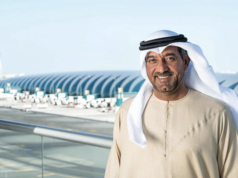




When Hamad Al Khater became group chief executive of Qatar Airways in December 2025, he inherited one of the world’s most internationally recognised airline brands. He also inherited an unusually interconnected business: a global carrier, Hamad International Airport, cargo, ground handling, catering, retail and tourism interests all organised around Doha’s role as a transfer hub.
Al Khater arrived with direct experience of that operating system. Before taking the group role, he was chief operating officer of Hamad International Airport, where he worked on capacity, service quality and the complex coordination required at a fast-growing global gateway. Earlier in his career he held senior roles at QatarEnergy, giving him experience in a major national enterprise outside aviation. That combination of infrastructure discipline and state-enterprise management helps explain his selection.
His first full year has placed scale at the centre of the story. By March 2026, Qatar Airways Group’s fleet stood at 313 aircraft and its network reached 183 destinations. The group carried 41.8 million passengers during the 2025-26 financial year, producing revenue of about $23 billion and net profit of $1.94 billion. Those figures gave Al Khater a strong platform, but they also raised expectations that the airline can keep growing without diluting the product that built its reputation.
The largest strategic commitment is the fleet. Qatar Airways has announced agreements with Boeing and GE Aerospace covering up to 210 widebody aircraft and more than 400 engines. The order is designed to support route growth, replace older aircraft and preserve Doha’s competitive position against other global hubs. It also creates a long execution runway. Deliveries, financing, crew recruitment, maintenance capacity and airport slots will need to move in step.
Al Khater’s airport background is especially relevant here. Airline growth is only valuable if the hub can process it reliably. Hamad International Airport has expanded its terminal, retail and passenger facilities while pursuing a service-led identity. Al Khater understands the transfer journey not as a collection of separate businesses, but as a single chain. Punctuality, baggage, security, lounges, retail, gate allocation and onward connections all influence whether travellers choose Doha again.
There is also a destination dimension. Qatar’s aviation strategy once depended overwhelmingly on sixth-freedom transfer traffic. The successful staging of the FIFA World Cup in 2022, the continued growth of the events calendar and investment in Visit Qatar have created a stronger case for stopovers and direct visits. Qatar Airways is the country’s most powerful international marketing channel, and Al Khater’s task includes converting network reach into longer stays and more visitor spending.
His early tenure has therefore been less about dramatic reinvention than about integration. The group must absorb expansion, maintain premium standards and use data across the passenger journey. Cargo remains another strategic asset, giving Qatar Airways revenue diversity and connecting Doha to global trade flows as well as leisure markets.
The risks are substantial. Delivery delays can upset capacity plans. Regional airspace disruption can force costly rerouting. Competition for pilots, engineers and premium customers is intense. And the airline must manage environmental pressure while operating a long-haul network built on widebody aircraft.
Al Khater’s importance lies in the kind of leader he represents. Qatar Airways no longer needs to prove that it can become a global carrier. It needs to prove that a very large, premium aviation group can keep operating as one coherent system. By elevating the executive who helped run its hub, Qatar has placed operational execution at the centre of that next phase.