
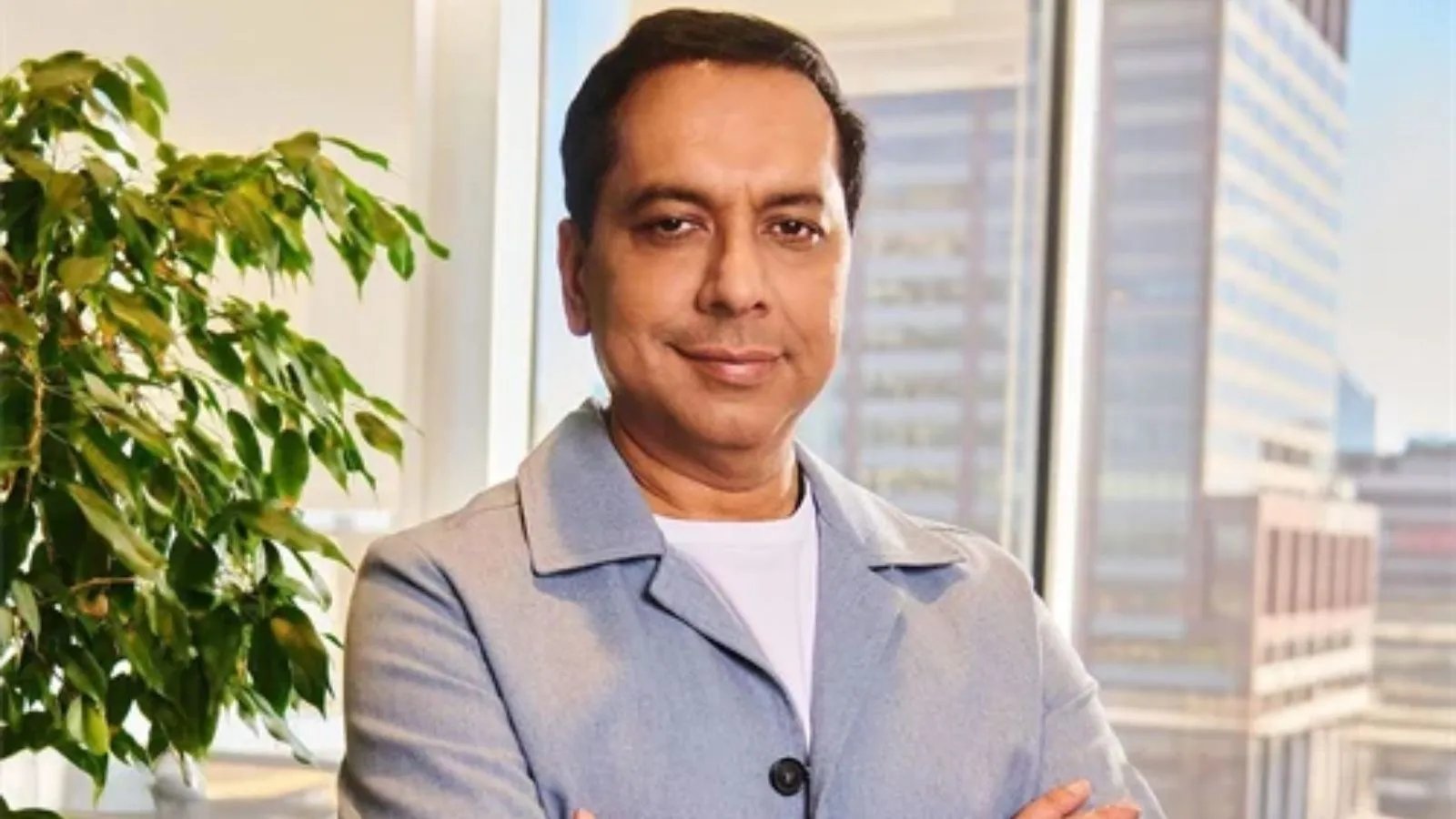

MongoDB CEO Chirantan ‘CJ’ Desai, who took the top job less than a year ago, is leaving the database software giant to head Meta’s newly created enterprise business division, signalling the social media giant’s growing ambitions in the enterprise AI market.
Desai is a technology veteran with stints in leadership roles at various enterprise software majors such as ServiceNow and Cloudflare. He joined MongoDB in November last year, and reports suggest that Desai received an offer directly from Meta CEO Mark Zuckerberg that he ultimately could not refuse.
In his new role of chief enterprise platform officer, Desai will focus primarily on turning Meta’s rapidly growing AI stack into ready-to-deploy products and services for businesses. He will report directly to Zuckerberg.
Desai’s background and track record makes him a significant hire for Meta. Additionally, Zuckerberg’s accompanying announcement of a new enterprise AI platform on Monday, September 28, comes on the heels of a triumphant rollout of Meta’s Muse personal AI agent.
However, Meta is jumping into a very crowded enterprise AI market dominated by a host of enterprise software firms, big cloud companies like Amazon, Google, and Microsoft, and AI upstarts such as Anthropic and OpenAI. It will be interesting to see if the Facebook- and Instagram-parent can leverage its expertise in social media advertising into selling different kinds of AI services to businesses.
To lead this effort, I’m excited that Chirantan “CJ” Desai will join Meta as Chief Enterprise Platform Officer, reporting directly to me. CJ is an experienced enterprise leader with a track record of building full-stack software and delivering results in AI, infrastructure,…
— Mark Zuckerberg (@finkd) September 28, 2026
“Over the coming years, AI will fundamentally redefine how organisations of all sizes innovate, grow, serve customers, and run business operations. Meta has a unique role to play because it is bringing together advanced models and leading agents with a proven track record of helping millions of advertisers and hundreds of millions of businesses scale. Meta Enterprise Platform will focus on turning its AI stack into products and services that companies can deploy for their own businesses,” Desai said in a statement.
Who is CJ Desai?
Desai spent his early years in India before moving to the United States in 1993 for studies. In 1995, he earned a dual master’s degrees in computer science and business administration (MBA) from the University of Illinois Urbana-Champaign.
That same year, Desai joined Oracle and was part of the team that launched the company’s first cloud service. He was also pivotal to building up Oracle and cloud software firm Pivotal’s offshore businesses in Bengaluru.
Story continues below this ad
In 2004, he joined cybersecurity firm Symantec and rose up the ranks to become the Executive Vice President of the firm’s Information Management Group in 2012. The next year, Desai joined EMC, another tech multinational, to lead its Emerging Technology Products Division. A majority of his work at the company was reportedly focused on rolling out new products and generating revenue from emerging technologies and cloud computing.
It was in 2016 that Desai joined ServiceNow as chief product officer. During his eight-year stint at ServiceNow, including as president and chief operating officer, he oversaw the company’s products, platform, design, engineering, AI research, and cloud infrastructure teams. Desai also helped scale the company from $1.5 billion to more than $10 billion in annualised revenue.
In 2024, Desai was hired by Cloudflare to oversee its product and engineering organisations. A year later, he was tapped as president and CEO of MongoDB, succeeding Dev Ittycheria, another Indian-origin CEO, who spent 11 years at the helm.
Why did Zuckerberg pick Desai?
Meta may have hired Desai to make a splash. “To make sure that we realize how serious [Zuckerberg] is, he hired a CEO of a publicly traded company to lead this business,” Gil Luria, an analyst with DA Davidson, was quoted as saying by The Information.
Story continues below this ad
The social media giant has made attempts in the past to target business customers with products like the now-defunct Slack competitor, Workplace. Meta also hired former Salesforce executive Clara Shih to lead its enterprise push, but she left after a year.
However, Meta’s core advertising business makes it easier for the company to pitch AI services to businesses. It has generated $114 billion in the first half of this year selling ads to businesses, including many large companies. Meta’s tech rivals have adopted similar strategies.
In 2022, Amazon targeted cloud customers to persuade them to buy ads and other products from different parts of the company. Google has also similarly packaged two or more of its services together in the past.
In the context of AI, Meta’s strategy has involved aggressively hiring talent and heavily investing in infrastructure and other resources. Last year, the company set up a new Superintelligence Labs, an AI division created by spending billions of dollars on top talent and acquisitions to build a dream team.
Story continues below this ad
This includes Alexandr Wang, CEO of Scale AI (a company known for data labeling rather than model development), who has been appointed Chief AI Officer; Nat Friedman, former CEO of GitHub; Daniel Gross, former Apple employee and co-founder of Safe Superintelligence; and dozens of other hires from other tech giants, many of whom were offered multi-million-dollar packages.
Who is MongoDB’s new CEO?
Founded in 2007, MongoDB is a US-based company that develops database software used by businesses to build and run applications, with tools for data management, search, analytics, and AI.
Desai’s exit does not appear to be great news for the publicly traded company, whose stock fell 19 per cent. Following the announcement, MongoDB has brought back Desai’s predecessor, Dev Ittycheria, as interim president and CEO while it looks for a permanent replacement.
No company has meant more to me professionally than MongoDB. I spent more than 11 years as CEO, and even after stepping down last year, I never really left. Serving on the board kept me close to our people, our customers and the business, and only strengthened my conviction in…
— Dev Ittycheria (@dittycheria) September 28, 2026
“As a Partner and Senior Advisor at Sequoia Capital, I have a front-row seat to the founders, technologies and companies shaping the AI era. I see firsthand how AI is not only changing how software is built and businesses operate, but expanding technology’s role from helping people manage work to increasingly helping perform the work itself. I look forward to bringing those insights back to MongoDB as we help our customers capitalize on what may be the most consequential platform shift of our generation,” Ittycheria said in a post on X.