
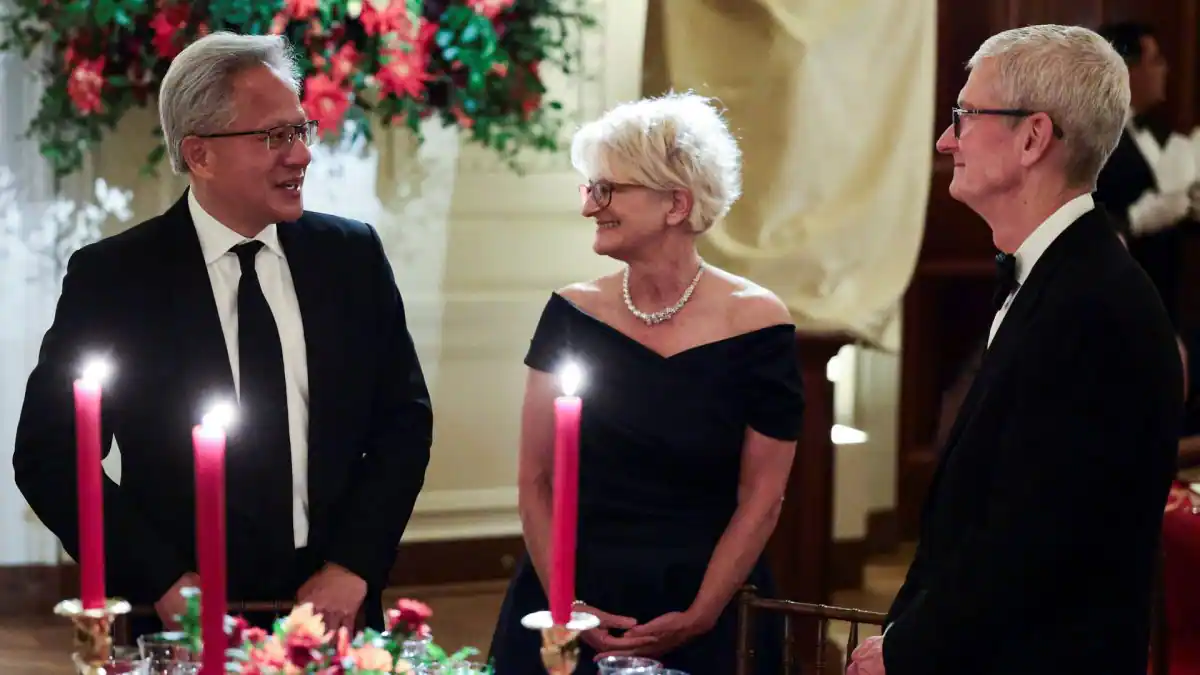

AI takes centre stage at Trump-Xi state dinner as Nvidia’s Jensen Huang, OpenAI’s Sam Altman and Google’s Sundar Pichai join a guest list packed with top technology and business leaders
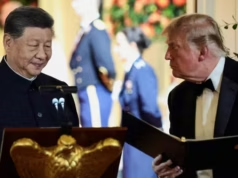
Artificial intelligence and the technology sector took a prominent place on the guest list for a White House state dinner hosted for Chinese President Xi Jinping on Friday, with some of the biggest names in the global tech industry invited to join US President Donald Trump and the Chinese leader.
Nvidia CEO Jensen Huang, OpenAI CEO Sam Altman and OpenAI President and co-founder Greg Brockman were among the technology executives listed by the White House. Google CEO Sundar Pichai and Meta CEO Mark Zuckerberg were also invited.
The presence of the technology leaders comes as AI has emerged as a key issue in the US-China relationship, alongside trade, advanced semiconductors and competition over critical technologies.
Trump and Xi held talks at the White House, with Xi saying there was significant scope for cooperation between the two countries on AI despite their broader technological rivalry.
According to a Chinese Foreign Ministry readout, Xi said the US and China are both major powers in AI and should use their respective strengths to address the risks associated with the technology.
He called on the two countries to work together against the misuse of AI rather than “guarding against each other”. Xi also said AI development should remain under human control.
 More from Business
AI becomes key part of US-China talks
AI has become one of the most important areas of competition between Washington and Beijing.
The US has sought to maintain its lead in advanced AI systems and semiconductor technology, while imposing restrictions on China’s access to some advanced chips and technology. China, meanwhile, has been accelerating the development of domestic AI capabilities and seeking greater access to international technology markets.
The issue has also created areas where the two countries could potentially cooperate.
During recent US-China talks, US Treasury Secretary Scott Bessent proposed a bilateral mechanism to notify each other about significant AI safety incidents, according to Reuters.
Xi said on Thursday that competition between the two countries was inevitable but should remain healthy and within limits.
“We should coexist in peace,” Xi said through a translator, adding that both countries could gain from cooperation.
Tech executives at White House dinner
The White House guest list also included senior officials from the Trump administration, diplomats and members of Congress and the judiciary.
Supreme Court Justices Amy Coney Barrett and Brett Kavanaugh, along with their spouses, were among those invited.
Jeff Yass, the billionaire investor and major Republican donor who has a stake in ByteDance, the Chinese parent company of TikTok, was also on the guest list.
Several prominent figures from the financial sector were invited as well, highlighting the broader economic stakes of the Trump-Xi meeting.
For technology companies, the US-China relationship has become increasingly important as Washington’s national security policies affect semiconductor exports, AI computing and supply chains.
Nvidia has been at the centre of the debate over US restrictions on advanced AI chips to China. OpenAI is one of the world’s leading developers of generative AI systems, while Google and Meta are major players in the development and deployment of AI models.
The dinner therefore brings together technology executives whose companies are directly affected by the evolving US-China technology relationship.
Trump-Xi meeting comes amid wider rivalry
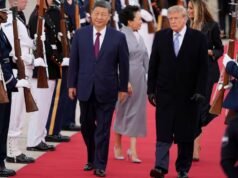
The state dinner followed an elaborate arrival ceremony for Xi at the White House, where Trump highlighted his relationship with the Chinese leader.
Trump later described his meeting with Xi as a “great meeting” but did not provide details when reporters asked about issues including AI and Taiwan.
The two countries are also trying to maintain a fragile trade truce after months of tariff tensions. Their relationship remains marked by disputes over trade, technology, Taiwan and critical supply chains.
Against that backdrop, the presence of leading AI and technology executives at the state dinner provides a high-profile setting for the private sector to be part of discussions surrounding one of the most consequential areas of US-China competition.
Xi’s call for the two countries to cooperate on AI also offers a potential channel for dialogue even as Washington and Beijing continue to compete over technological leadership.