

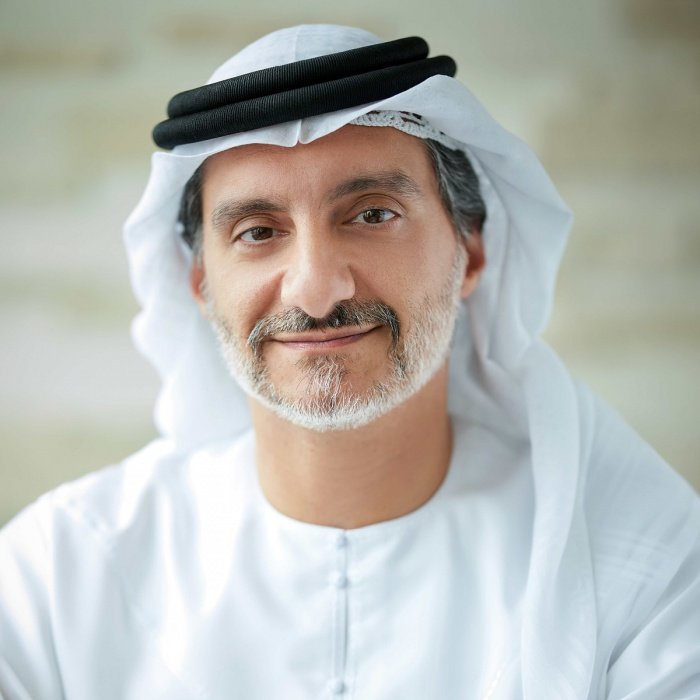


Forbes Middle East has ranked His Excellency Saleh Mohamed Al Geziry fourth in its Top 100 Travel and Tourism Leaders 2026 list, recognising one of the principal architects of Abu Dhabi’s emergence as a globally competitive cultural, leisure and business tourism destination.
The recognition follows a year in which Abu Dhabi welcomed 26.6 million visitors across its culture and tourism sectors. Hotel revenue increased by 19.5 per cent to AED9.1 billion, while the number of MICE delegates rose by 40 per cent to 2.2 million. (Forbes Lists)
Those numbers tell only part of the story.
Since becoming Director General for Tourism at the Department of Culture and Tourism Abu Dhabi in April 2022, Al Geziry has helped broaden the emirate’s proposition from a collection of world-class attractions into a connected destination ecosystem spanning culture, hospitality, entertainment, sport, gastronomy, business events, technology and Emirati heritage.
His approach has been shaped by a career that has moved across almost every dimension of destination development.
Al Geziry began his career in 2002 at Dubai’s Department of Tourism and Commerce Marketing, joining its overseas promotions division after graduating from the American University in Dubai with a bachelor’s degree in marketing. He later completed an executive diploma in public administration at Singapore’s Lee Kuan Yew School of Public Policy.
Over 12 years at Dubai Tourism, he progressed to become Director of Overseas Promotions and Inward Missions. He led international delegations and participated in more than 100 exhibitions and roadshows, helping build Dubai’s presence in markets including India and China at a time when both were beginning to transform global outbound travel.
It was a formative period. Destination marketing in the early 2000s was still heavily reliant on trade relationships, roadshows and national tourism offices. Al Geziry developed an understanding of how airlines, tour operators, hotels, attractions, retailers and governments must work together to build demand.
His contribution was recognised with the Dubai Government Excellence Award, and he graduated from the Mohammed Bin Rashid Leadership Programme. (alumni.amsi.ae)
In 2014, he moved into the private sector with Meraas, initially as Director of Hospitality before becoming Vice President of Retail.
The role placed him on the development side of the visitor economy. He worked across established destinations including City Walk and The Beach, while contributing to the opening of Boxpark, The Outlet Village, Last Exit, Kite Beach and the extension of City Walk. His portfolio also included the development of Al Seef, La Mer and Bluewaters.
The experience reinforced a principle that has subsequently become central to Abu Dhabi’s tourism strategy: successful destinations are not created through promotion alone. They require compelling places, investable concepts, strong operating partners and experiences that residents value as much as visitors.
In 2017, Al Geziry was appointed Director General of the Ajman Tourism Development Department. His mandate was to strengthen tourism’s contribution to the emirate’s economy while developing Ajman as a distinctive destination in its own right.
Rather than attempting to imitate its larger neighbours, Ajman focused on its own assets, including its coastline, natural landscapes, archaeological sites, pearling heritage and the inland enclave of Masfout. During his tenure, the tourism authority expanded its engagement with international travel markets, opened its first representative office for the UK and Ireland and promoted investment in niche, cultural and experiential tourism. (visit-ajman.ae)
That combination of global destination marketing, private-sector development and public-sector leadership made Al Geziry a natural choice to lead Abu Dhabi’s tourism sector when he was appointed in 2022.
He arrived as international tourism was emerging from the pandemic and Abu Dhabi was preparing to accelerate its economic diversification. His task was not simply to recover visitor numbers, but to help position tourism as a long-term engine of investment, employment and international influence.
At the centre of that work is Abu Dhabi’s Tourism Strategy 2030.
The strategy seeks to increase annual visitor numbers from almost 24 million in 2023 to 39.3 million by the end of the decade. It aims to raise tourism’s annual economic contribution from approximately AED49 billion to AED90 billion, create 178,000 new jobs and almost double international overnight visitors to 7.2 million.
Hotel capacity is planned to grow from 34,000 rooms in 2023 to 52,000 by 2030, supported by new resorts, holiday homes and a broader range of accommodation. (mediaoffice.abudhabi)
Al Geziry’s influence can be seen in the breadth of the strategy. Abu Dhabi is being developed and marketed not around a single defining attraction, but as a destination offering multiple reasons to visit throughout the year.
Culture remains fundamental. Louvre Abu Dhabi has established Saadiyat Island as an international cultural destination, while Zayed National Museum, teamLab Phenomena Abu Dhabi, the Natural History Museum Abu Dhabi and the wider Saadiyat Cultural District are creating one of the world’s most significant concentrations of cultural institutions.
Yet the strategy reaches much further. Yas Island provides a powerful family leisure and entertainment proposition. The Abu Dhabi Grand Prix, UFC, NBA Abu Dhabi Games and EuroLeague Final Four draw global audiences. Abu Dhabi Calendar combines these international properties with concerts, comedy, theatre, exhibitions and home-grown cultural festivals.
DCT Abu Dhabi has also worked to take visitors beyond the capital, developing the tourism potential of Al Ain and Al Dhafra through their heritage, landscapes, oases, festivals and outdoor experiences.
In 2024 alone, DCT Abu Dhabi’s cultural sites, libraries and museums attracted more than 5.5 million visitors. More than 1.8 million people attended major cultural events, festivals and platforms, while Louvre Abu Dhabi welcomed a record audience of more than 1.4 million. (dct.gov.ae)
Al Geziry has also helped place food at the centre of Abu Dhabi’s destination identity.
The arrival of the Michelin Guide, the creation of the AED100 million Abu Dhabi Culinary Investment Fund and partnerships designed to bring leading chefs, restaurant concepts and hospitality brands to the emirate have given gastronomy a more strategic role within the visitor economy. The launch of the region’s first École Ducasse culinary studio further connected tourism growth with professional development and local capability.
Business tourism has expanded alongside leisure. The Abu Dhabi Convention and Exhibition Bureau has introduced new funds and partnerships to attract major conferences, exhibitions, corporate meetings and incentive groups.
In 2025, the emirate hosted 5,925 business events, including 23 mega-events, generating more than two million delegates and exceeding its MICE visitor target by 18 per cent. (dct.gov.ae)
International distribution and connectivity have been another priority. DCT Abu Dhabi has expanded its network across global source markets while building multi-year partnerships with Expedia Group, WebBeds, Amadeus, Trip.com Group and other major travel platforms.
These relationships allow Abu Dhabi to combine brand-building with increasingly targeted, data-led conversion campaigns. They also support the emirate’s work with Etihad Airways and other carriers to turn aviation connectivity into longer stays and higher visitor spending.
The evolution of the Etihad stopover programme is a good example. By making it easier for passengers travelling through Abu Dhabi to experience the emirate, the initiative transforms connecting traffic into tourism demand and introduces the destination to travellers who might otherwise have remained inside the airport.
Technology is becoming equally important. During 2025, DCT Abu Dhabi progressed more than 23 artificial intelligence initiatives. These included a digital concierge serving guests across more than 80 hotels and alternative accommodation providers, supporting more personalised journeys and better-informed visitor decisions.
At the same time, the revised Hotel Classification Manual, Visitor Experience Guidelines and workforce initiatives including NAWAH, DCTLEARN, Khebraty and the Tourism Youth Summer Camp demonstrate that growth is being matched by investment in standards, skills and Emirati leadership.
This is perhaps the defining feature of Al Geziry’s work in Abu Dhabi. He treats tourism as an interconnected economic system rather than a marketing function.
Attractions create demand, but connectivity converts it. Events drive visitation, but hospitality standards determine whether visitors return. International campaigns build awareness, but authentic Emirati experiences distinguish the destination. Technology can improve service, but people still deliver hospitality.
In reflecting on DCT Abu Dhabi’s progress, Al Geziry has said the organisation has “deepened strategic partnerships locally and globally” while expanding the emirate’s cultural, entertainment and culinary offering.
That expansion is now producing measurable results. Abu Dhabi welcomed 5.9 million hotel guests in 2025, with international overnight visitation recording double-digit growth. Hotel average daily rate increased by 19 per cent to AED591, while targeted tourism marketing expanded across 25 international markets. (dct.gov.ae)
Forbes Middle East’s recognition is therefore about more than a single year of visitor growth.
Al Geziry’s career has tracked the evolution of tourism in the UAE itself. He began by taking Dubai to the world through trade missions and international promotion. At Meraas, he helped create places that people wanted to experience. In Ajman, he demonstrated how a smaller destination could build its own identity around community, heritage and natural assets.
In Abu Dhabi, those lessons have come together at a much greater scale.
The ambition is not simply to attract 39.3 million visitors. It is to build a tourism economy capable of creating jobs, attracting investment, strengthening national identity and sharing Emirati hospitality with the world without losing the qualities that make the destination distinctive.
That balance between global ambition and local identity will determine Abu Dhabi’s long-term success.
Saleh Al Geziry has spent more than two decades preparing for that challenge. His latest recognition reflects both how far Abu Dhabi has travelled and the scale of the journey still ahead.
By Justin Cooke