
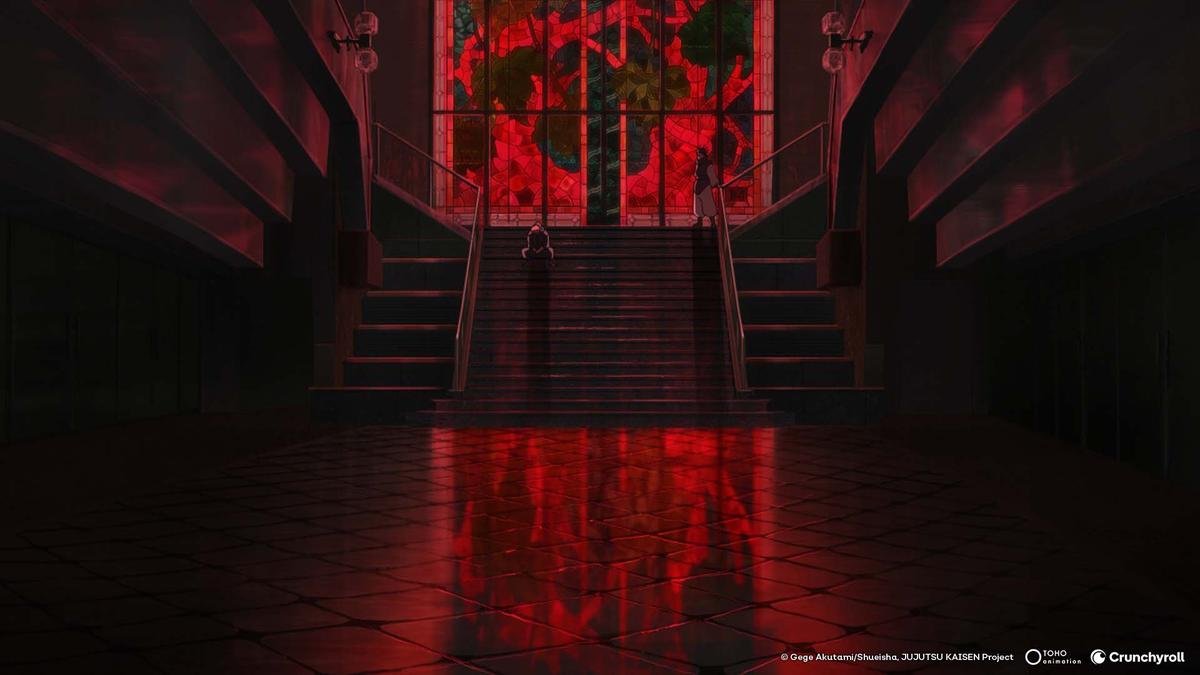

We are currently living through a magnificently unhinged new golden age of shonen where the old Heian era gods like Dragon Ball, One Piece, Naruto and Bleach, continue to walk among us. These seasoned fighters keep throwing out fresh material adapting for contemporary sensibilties, since the expectations are absurdly high and the audience has seen just about everything. Very few modern titles in the genre feel like they belong in the same breath…
… with the sole exception of Jujutsu Kaisen, of course.

This sharper, more disruptive volatile force remains one of the modern era’s most prized fighters in the genre, inheriting and rewiring the grammar of battle shonen with a ridiculous sense of self-assuredness. Its third season, dubbed the Culling Games Arc, has been carrying forward the absurdity of those fandom expectations every Thursday, turning every weekly episode into a major televised event where the internet collectively loses its mind, spiralling into incomprehensible nonsense, as Twitter timelines collapse into domain expansions of braindead arguments about who is the strongest and who just got folded the hardest. Lobotomy Kaisen is absolutely flourishing right now, and watching it spiral into even deeper, more refined levels of collective insanity has been a genuine privilege.
Jujutsu Kaisen Season 3 (Japanese)
Director: Shōta Goshozono
Cast: Junya Enoki, Yuma Uchida, Mikako Komatsu, Megumi Ogata, Daisuke Namikawa, Kazuya Nakai, Yuki Sakakihara,Tomokazu Sugita
Episodes: 25-30 minutes
Runtime: 12
Storyline: In the aftermath of the Shibuya Incident, Yuji and his allies are plunged into a nationwide jujutsu battle royale where sorcerers are trapped inside colonies in a fight to the death
For anyone entering fresh, the premise may be a little tricky to make sense of at first. Based of Gege Akutami’s bestselling manga, Jujutsu Kaisen follows teenager Yuji Itadori as he accidentally becomes the vessel of Ryomen Sukuna, the most dangerous curse in existence, and is absorbed into the clandestine world of jujutsu sorcery where curses are born from human negativity and exorcised through cursed techniques. Season 3 builds directly on the wreckage of the infamous Shibuya Incident last season, that culminated in the sealing the modern era’s strongest sorcerer Satoru Gojo, and forcing Yuji to confront the consequences of mass destruction caused while Sukuna commandeered his body. This leads directly into the Culling Games — a nationwide jujutsu battle royale where sorcerers are trapped inside colonies, bound by evolving rules that players can modify by trading points assigned for killig each other.
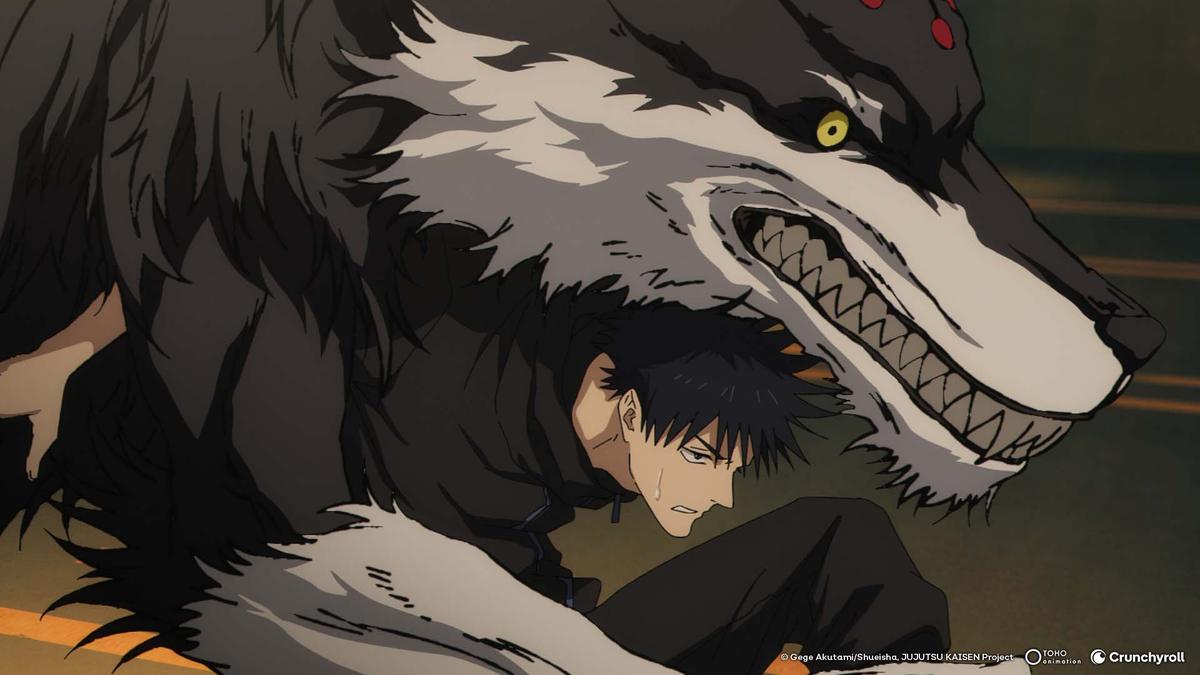
A still from ‘Jujutsu Kaisen’ Season 3
| Photo Credit:
Crunchyroll
Despite Akutami’s increasingly dense mythos, what makes this season exceptionally good is its individual trajectories. Yuji has come a long way since his debut; now a self-imposed instrument of justice who has reduced himself to a mere cog within a larger system. His closest friend Megumi approaches the game as a strategist willing to move forward by any means necessary. Meanwhile, other key allies make appearances throughout the season — including Choso, Panda, and Yuki, as well as newcomers Higuruma, Hakari, Kirara, Takaba and a veritable assortment of deadly foes — creating a network of intersecting motives that rarely align yet consistently push the narrative forward. While the season maintains a remarkable consistency throughout, two episodes in particular are definitive peaks, both anchored by returning figures from Jujutsu Kaisen: 0 whose re-entry into the main timeline reshapes the scale and stakes of this arc.

The first of these, titled “Perfect Preparation”, is a culmination and rupture for Maki Zenin. One of three great jujutsu families, the Zenin clan has represented the most entrenched form of jujutsu aristocracy, built on misogyny, hereditary elitism, and a violent disdain for those without cursed energy. We learn how throughout her childhood, Maki and her sister Mai are treated as liabilities, subjected to abuse by the repulsive likes of Naoya Zenin, whose nauseating entitlement is inseparable from the clan’s ideology. As one of the only two members in the clan’s recorded history to (un)fortunately fall into the bracket, Maki’s brutal infiltration of the estate collapses years of unsaid tension into a single act of retribution. The Zenin clan’s reckoning is triggered by Mai’s sacrifice which removes the final limitation on Maki’s Heavenly Restriction and aligns her physically and philosophically with her predecessor Toji Fushiguro. From this point on, the episode commits fully to staging her rampage as a sustained release of suppressed violence.
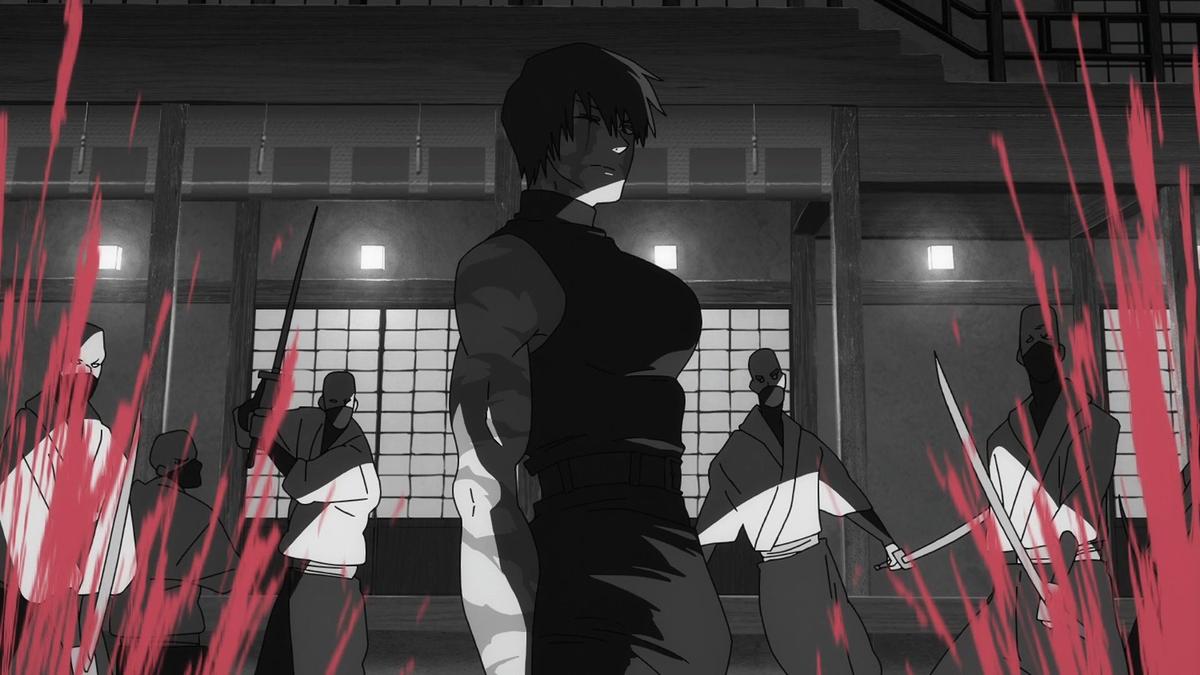
A still from ‘Jujutsu Kaisen’ Season 3
| Photo Credit:
Crunchyroll
The stunning fight sequence that ensues sees Maki slice and slide her way through a battallion of foot soldiers, as bodies drop before reactions can register. The crisp, kinetic animation nods to Kill Bill through stark lighting shifts and monochrome flourishes punctuated by bursts of colour. The fluid choreography looks clear even at peak velocity, as Maki 2.0 paints the clan red, and this culminates in a climactic face-off with Naoya as she reads through the staggered 24 FPS movement of his technique and shatters his smug face with a single decisive strike so nice, MAPPA had to show us thrice.

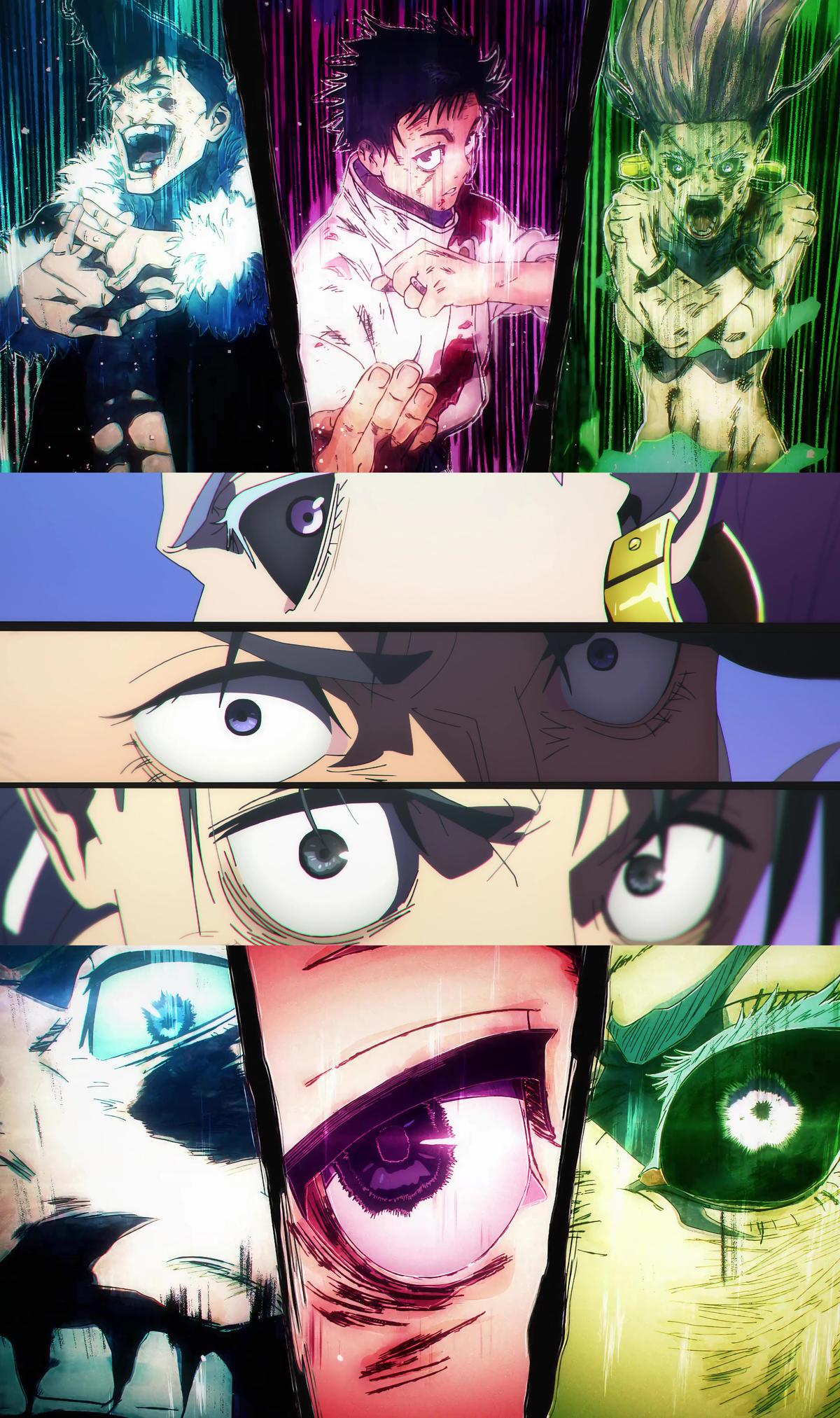
The second standout, the finale “Sendai Colony,” assembles a four-way deadlock between Yuta — back from his off-screen training in Africa — and three Special Grade foes Takako Uro, Ryu Ishigori, and the grotesque cockroach monster Kurourushi. It is here that creative director Shōta “Gosso” Goshozono’s storyboarding asserts itself beautifully through exquisite blocking choices, allowing each cursed technique to occupy the screen with stellar visual logic — whether it is Uro manipulating the sky as a tangible surface, or Ryu firing overwhelming bursts of cursed energy from that slick pompadour. This forces Yuta to constantly shift between cursed energy output, reverse cursed technique, close-quarters combat and Rika’s terrifying presence.
Stills from ‘Jujutsu Kaisen’ Season 3
| Photo Credit:
Crunchyroll
The long-anticipated three-way Domain Expansion sequence is the culmination of these clashes that translates the iconic manga panel into a fluid climax, that’s just undeniably got the sauce. Yuta’s arc also threads through all the spectacle as he recognises the emotional residues driving his opponents, by acknowledging Uro’s resentment and gratifying Ryu’s hunger, before responding without condescension. The spectacular closing stretch set to King Gnu’s addictive “Aizo” pushes the sequence into a sustained crescendo of gorgeous impact frames that closes this delicious cour, with a delectable little dessert of pure animator indulgence.

Across the season, the steady evolution of JJK’s fight mechanics is one of its most impressive feats. MAPPA refuses to treat cursed techniques as something static, framing them as systems to be interrogated and reinterpreted in real time. This is most evident in Yuji’s confrontation with Higuruma where a courtroom Domain replaces his conventional ‘Left-Right-Goodnight’ brute force with legal studies; in Megumi’s battle with Reggie Star where the latter’s inventory-based technique collides with the physical limits of Megumi’s incomplete Domain; and also in the encounters with Hakari and Kirara, where movement itself becomes conditional and governed by unseen rules. The complexity and endless maleability of Akutami’s incredible power system turns each fight into a complex equation to be solved, which sustains our engagement even when the narrative often pauses for frustratingly lengthy stretches of exposition.
A still from ‘Jujutsu Kaisen’ Season 3
| Photo Credit:
Crunchyroll
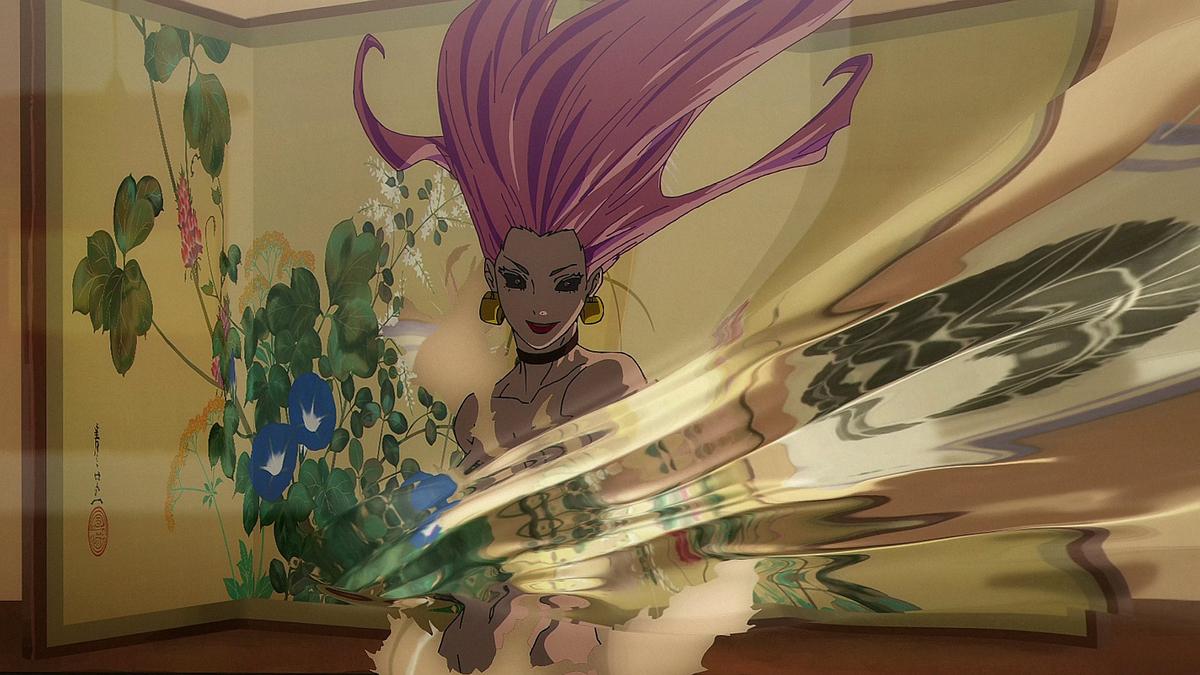
This attention to structure extends to the direction, where Gosso consistently prioritises clarity of movement through expansive tracking shots that follow characters across collapsing architecture, controlled shifts in perspective to render distance and proximity, and carefully staged compositions that situate characters within subtler moments of environmental storytelling. Gosso’s impeccable attention to detail has been the ace up JJK’s sleeve that has periodically distinguished the series within a crowded field, which also makes the reports of his potential departure to the French Illumination Studios quite confounding since the sensibility he brings to JJK feels too specific to be easily transplanted (to the likes of Minions, that too).

As the first phase of the Culling Game closes, with new players entering, alliances reshaping, and the possibility of Gojo’s return hovering as a distant objective, JJK continues to expand and resolution feels deliberately out of reach. Meanwhile, the parallel joys of watching the fandom slip further and further towards Special Grade brainrot online has become inseparable from the holistic JJK experience that feels exhausting and strangely communal, all at once. Through all of this, Season 3 holds its ground as one of the most assured anime productions of the moment that understands the traditions it inherits while actively reshaping them. It will indisputably remain firmly in the conversation when conversations around the year’s best begin.
Jujutsu Kaisen Season 3 is available to stream on Crunchyroll
Published – March 27, 2026 04:50 pm IST