

JPMorgan CEO says Washington should understand India’s refinery needs and the impact on global oil markets before imposing tariffs over Russian crude purchases
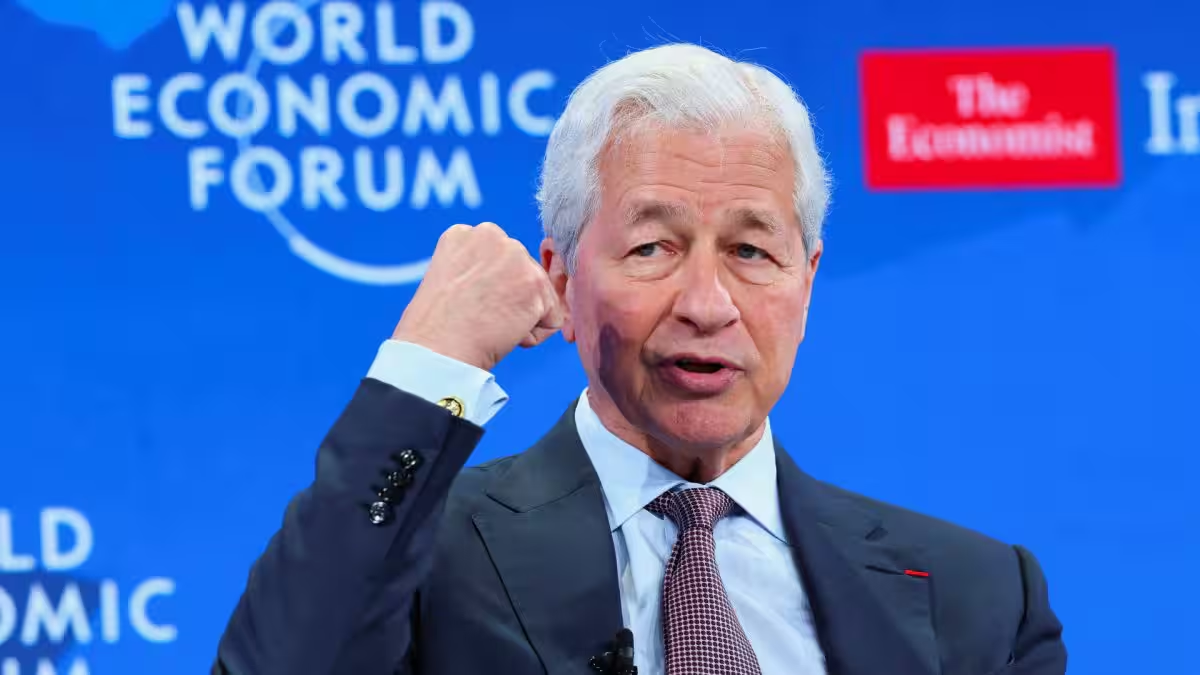
JPMorgan Chase CEO Jamie Dimon has urged the United States to consider India’s refinery requirements and the impact on global oil markets before imposing any new measures on countries buying Russian crude.
Speaking to CNBC-TV18 during the JPMorgan India Investor Conference in Mumbai, Dimon said Washington should avoid imposing measures that could hurt India while trying to put pressure on Russia.
“I think hopefully America will sit down and understand all those issues and, you know, not end up punishing India and the world oil markets while doing what we need to do to combat Russia,” Dimon said.
His comments come after US President Donald Trump signed the Lindsey O Graham Sanctioning Russia and Iran Act into law. The legislation gives the US president the power to impose tariffs of up to 100 per cent on countries that buy Russian oil and gas. India and China are among the major buyers that could be affected.
Why Dimon raised concerns over Indian refineries
Dimon said the US should first understand how Russian crude is being used by Indian refiners.
He pointed out that different refineries are designed to process different grades of crude. If Indian refiners stop buying Russian oil, they may have to source crude from other countries, but the replacement crude may not have the same characteristics.
“I think in this case [we should] be quite respectful of the fact that some of that oil is refined and imported. If they don’t buy it here, they have to buy it elsewhere. It might not be the right kind of oil for those refineries,” Dimon said.
 More from Business
He also said Washington should engage with New Delhi on how any tariffs or other restrictions are implemented.
The concern is not limited to India. Dimon warned that measures affecting Russian crude could also have wider implications for the global oil market.
India’s Russian oil imports have already fallen
India has remained one of the largest buyers of Russian crude since Moscow’s invasion of Ukraine, helped by discounted supplies and the need to secure affordable energy.
However, India’s Russian oil purchases have declined in recent months.
According to Reuters, India’s imports of Russian crude fell 16.5 per cent in August to about 2.1 million barrels per day. Preliminary data suggested imports could fall further to around 1.9 million barrels per day in September. Russia nevertheless remained India’s largest oil supplier.
Indian refiners have also increased purchases from other suppliers, including Iraq and the United Arab Emirates, as they assess the risks from possible US action.
What the 100% tariff law means
The new US law does not automatically impose a 100 per cent tariff on India.
Instead, it gives Trump the authority to impose tariffs of up to 100 per cent on major buyers of Russian energy. The president can decide which countries are targeted and what tariff rate is applied.
The legislation is part of Washington’s wider effort to reduce Russia’s revenues from energy exports and increase pressure on Moscow over the war in Ukraine.
For India, however, the issue is closely linked to energy security. The country imports more than 85 per cent of its crude oil requirements, making changes in global supplies and prices important for domestic fuel costs and inflation.
The potential tariff threat also comes as India and the US continue to work on their broader trade relationship.
India defends its energy choices
New Delhi has repeatedly defended its decision to buy Russian crude, arguing that its energy sourcing is driven by availability, affordability and market conditions.
Indian officials have also warned that measures targeting Russian oil buyers could affect global energy markets.
The government has said India’s energy security remains a key consideration as it manages supplies from Russia, the Middle East and other producers.