

Scott Bessent is being considered for Trump’s proposed AI czar role, days after the US president announced plans to appoint a new AI adviser and create an “AI force” to oversee the technology
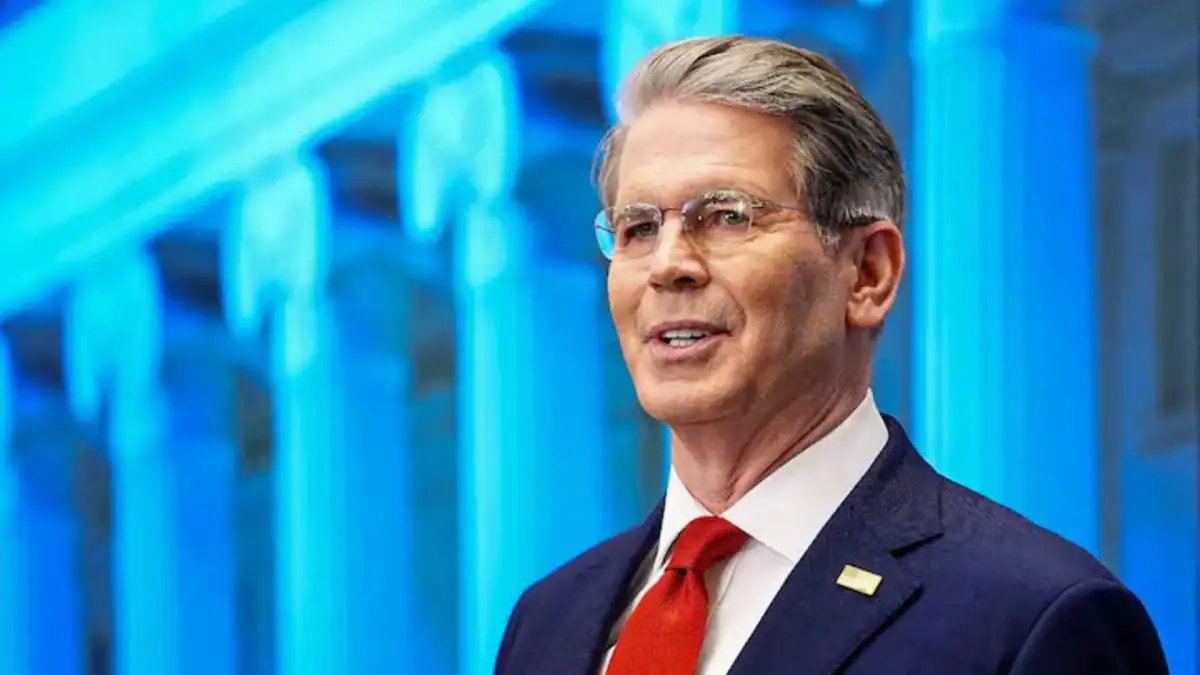
US Treasury Secretary Scott Bessent could become President Donald Trump’s next artificial intelligence adviser, with his name emerging as a possible choice for the administration’s proposed “AI czar” role, Reuters reported on Wednesday.
The possible appointment comes days after Trump said he would appoint a new AI adviser and create an “AI force”. The president did not provide details on the structure of the proposed force, how it would operate or what powers it would have.
What is an AI czar?
“AI czar” is an informal term for a senior government official tasked with coordinating artificial intelligence policy. It is not, by itself, a formal Cabinet position established by US law.
In Trump’s case, the role is expected to involve coordinating the administration’s approach to AI at a time when the technology has become an important issue for the US economy, national security and its competition with China.
However, the exact responsibilities of Trump’s new AI adviser have not yet been announced. Trump has only said that he plans to appoint an AI czar and establish an “AI force”.
Why is Scott Bessent being considered?
Bessent has recently been involved in high-level discussions on AI between the US and China.
 More from Business
On September 20, Bessent led talks in New York with Chinese Vice Premier He Lifeng ahead of a planned meeting between Trump and Chinese President Xi Jinping. AI was among the central issues discussed during the talks.
Bessent said Washington had proposed creating a US-China AI dialogue, with a particular focus on national security. The US also proposed a notification mechanism for AI-related incidents that reach the level of a national security concern.
The discussions put Bessent directly into one of the most important parts of the global AI debate: how the US and China can manage risks from increasingly powerful AI systems while competing for technological leadership.
His involvement also goes beyond AI. Trump has given Bessent responsibilities covering trade policy and negotiations involving Ukraine’s critical minerals. Bessent is also serving as acting commissioner of the Internal Revenue Service, while the Treasury Department is leading US sanctions efforts against Iran.
What did Trump announce about the AI force?
Trump announced his plan on September 19, saying he would appoint an AI adviser and create an “AI force”.
The announcement came as debate intensified in Washington over the risks associated with rapidly developing AI technology.
Trump has repeatedly argued against additional regulations that he believes could slow the growth of the US AI industry. In his September 19 announcement, he said his administration would not “hinder or stifle” AI development while using existing criminal and civil laws to deal with harmful activity.
The White House has not yet provided a detailed framework for the proposed AI force.
It is therefore not yet clear whether the force would primarily coordinate AI policy across government agencies, focus on national security issues or have a broader mandate covering the technology industry.
Who was Trump’s previous AI czar?
Bessent would not be the first Trump administration official associated with the AI czar title.
Venture capitalist David Sacks previously served as Trump’s AI and cryptocurrency czar. He stepped down from the formal position in March and moved into an external advisory role.
Sacks had been a prominent voice in the administration’s approach to AI policy, particularly its emphasis on allowing the industry to develop without additional federal restrictions.
Why AI has become a bigger US-China issue
The possible appointment of Bessent also comes as artificial intelligence is becoming increasingly connected to US-China economic and national security policy.
Washington and Beijing are competing over advanced AI systems, computing capacity, semiconductors and other technologies needed to develop the next generation of AI.
Bessent’s recent discussions with Chinese officials show how AI is now being included alongside traditional economic and trade issues in high-level US-China negotiations.
The proposed AI safety notification mechanism is one example. Under the US proposal discussed by Bessent, Washington and Beijing could establish a channel for communicating about AI incidents that raise national security concerns.
The talks also highlighted the limits to cooperation. Reuters reported that trust between the two countries remains low even as both sides explore areas where communication could be useful.