


Japan’s core inflation rose 1.7% in August, keeping price pressures close to the Bank of Japan’s 2% target ahead of its rate decision
Japan’s core consumer inflation remained close to the Bank of Japan’s 2 per cent target in August, adding to expectations that the central bank could raise interest rates to their highest level in more than three decades.
The core consumer price index, which excludes volatile fresh food but includes fuel costs, rose 1.7 per cent in August from a year earlier, government data showed on Friday. The increase was slightly below the 1.8 per cent rise forecast by economists and followed a 1.8 per cent increase in July.
The data came hours before the BOJ was due to conclude its two-day policy meeting on Friday. The central bank is widely expected to raise its policy rate to 1.25 per cent from 1 per cent, which would take borrowing costs to their highest level in about 31 years.
A separate measure that excludes both fresh food and fuel prices rose 1.9 per cent year-on-year in August. The BOJ closely watches this measure as an indicator of underlying, demand-driven inflation.
Core inflation has remained below the BOJ’s 2 per cent target for eight consecutive months. Government subsidies aimed at reducing utility bills have helped contain headline price pressures even as prices for a wider range of goods have increased.
However, higher energy costs linked to the conflict in West Asia and rising import prices caused by a weak yen are adding to inflationary pressure. The BOJ has warned that these factors could push underlying inflation above its target.
 More from Business
The central bank raised its policy rate to 1 per cent in June, saying Japan was approaching a point where inflation could sustainably remain around its 2 per cent goal. It kept rates unchanged in July but indicated that further increases could follow if price pressures continued to build.
Markets have increasingly priced in a September rate hike. Analysts polled by Reuters expect the BOJ to raise the rate to 1.25 per cent on Friday, with expectations for another increase to 1.5 per cent by the end of March 2027 and 1.75 per cent in the second quarter of 2027.
The focus will therefore be on Governor Kazuo Ueda’s guidance on the pace of future rate increases. Investors are watching whether the BOJ signals that further policy tightening could come sooner if inflationary pressures intensify.
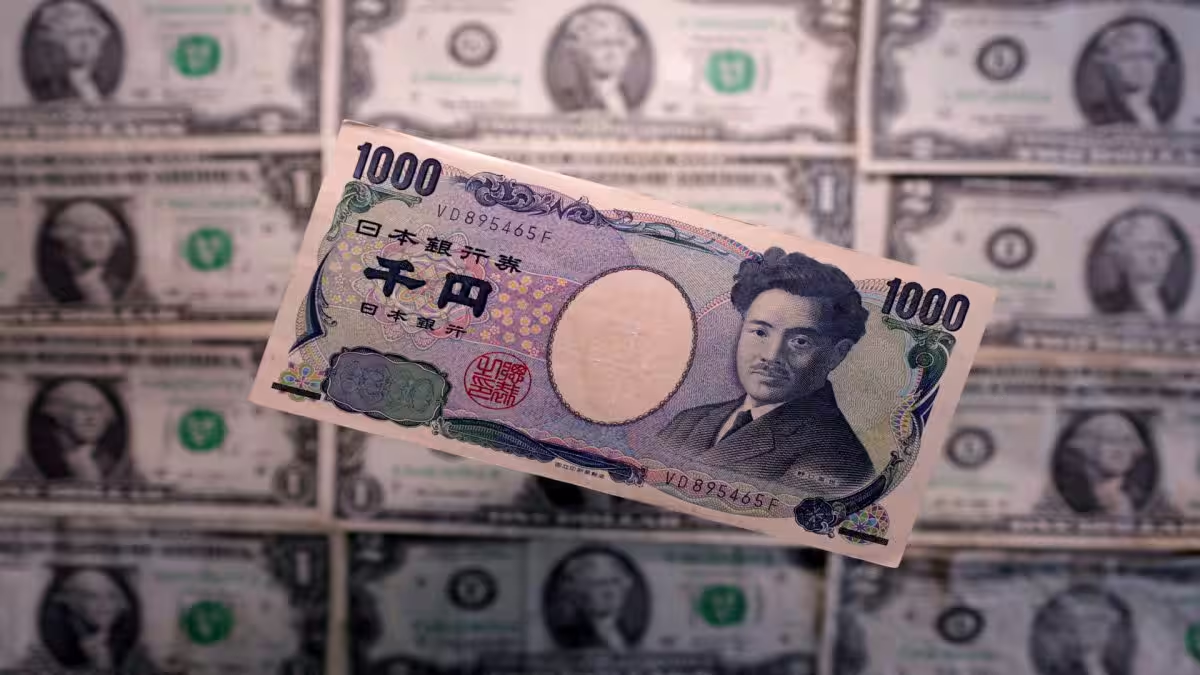
The yen remained under pressure ahead of the decision. It was around 156.19 against the US dollar early on Friday, while the euro traded at about 179.30 yen, as markets waited for clarity on the BOJ’s next steps.
The BOJ’s decision also comes against a changing global monetary policy backdrop. The US Federal Reserve has turned more hawkish, while the Bank of England has kept rates unchanged but warned about inflation risks. This leaves investors focused not only on the BOJ’s expected move but also on how quickly Japanese rates could rise from here.