

The 140-paragraph, 45-page declaration reflects the expanding Brics agenda, covering trade and development alongside security, AI, energy, climate and global governance
The 2026 New Delhi Declaration has set a new record for the length of a BRICS leaders’ declaration over the past decade, with the grouping’s latest summit document running to 140 numbered paragraphs across 45 pages.
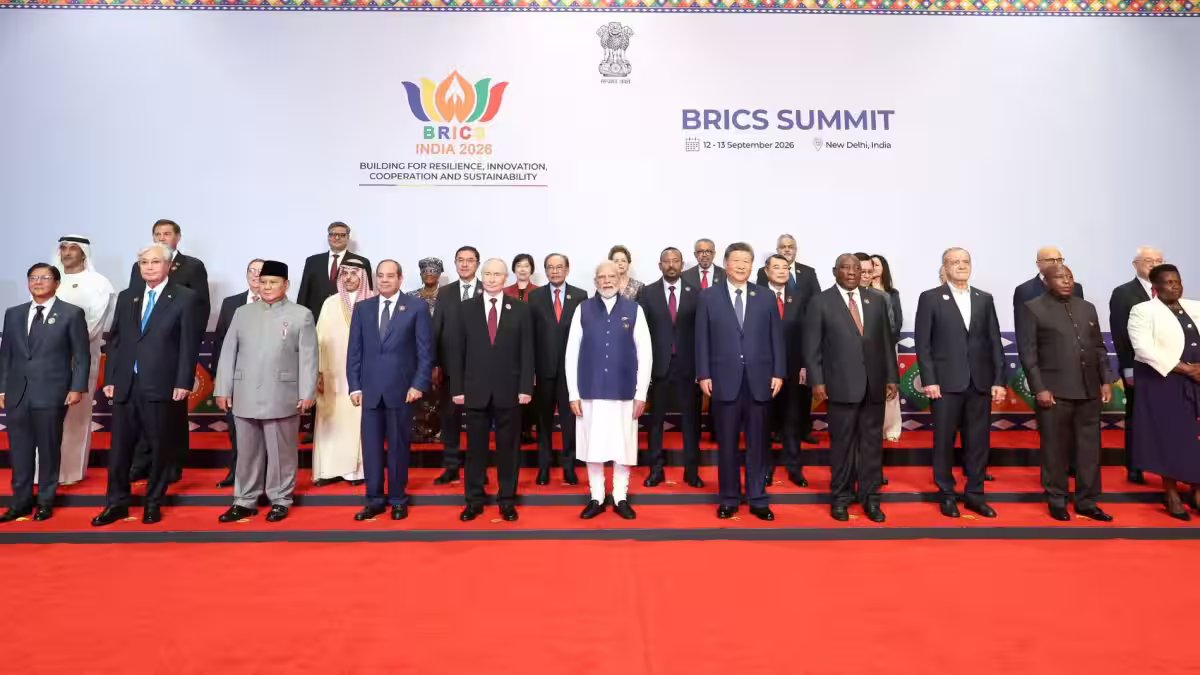
The declaration, adopted at the 18th BRICS Summit in New Delhi, is also substantially longer than the documents issued at recent summits, highlighting how the grouping’s agenda has expanded well beyond its traditional focus on economic cooperation and development.
The 2024 Kazan Declaration contained 134 numbered points, while the 2025 Rio de Janeiro Declaration had 126 paragraphs. The New Delhi document therefore adds six paragraphs to the previous record set at Kazan and 14 compared with Rio.
The latest declaration is also considerably longer than the 2016 Goa Declaration, which had 109 numbered paragraphs, marking an increase of nearly 29 per cent in a decade.
The growth in the size of BRICS declarations has not been linear. The 2017 Xiamen declaration had 71 points, followed by 102 paragraphs at Johannesburg in 2018 and 73 at Brasília in 2019. The Moscow declaration of 2020 had 97 paragraphs, while the Beijing document in 2022 contained 75. The Johannesburg II declaration in 2023 had 94 paragraphs before the sharp expansion seen at Kazan in 2024.
 More from Business
The New Delhi document’s length reflects the widening range of issues now handled under the Brics framework.
The declaration’s breadth is particularly significant following the expansion of Brics membership. With the grouping now representing a larger and more diverse set of emerging economies, its annual leaders’ statements have increasingly become broad policy documents covering geopolitical, economic, technological, environmental and social issues.
The trajectory from 109 paragraphs in Goa in 2016 to 140 in New Delhi in 2026 therefore offers a useful measure of how the BRICS agenda has evolved.
Kazan marked the first summit after the bloc’s major membership expansion and produced a 134-point declaration. New Delhi has gone a step further, producing the longest leaders’ declaration of the decade by numbered paragraph count.
The expansion is not simply a question of document length. The New Delhi Declaration’s wide-ranging references to AI, climate change, energy, digitalisation, terrorism, trade and global governance point to a BRICS agenda that is increasingly positioned at the intersection of economics and geopolitics.
In that sense, the record-setting declaration captures the broader transformation of BRICS: from a primarily economic grouping into a much wider platform for cooperation among emerging and developing countries on global political, economic and strategic issues.