

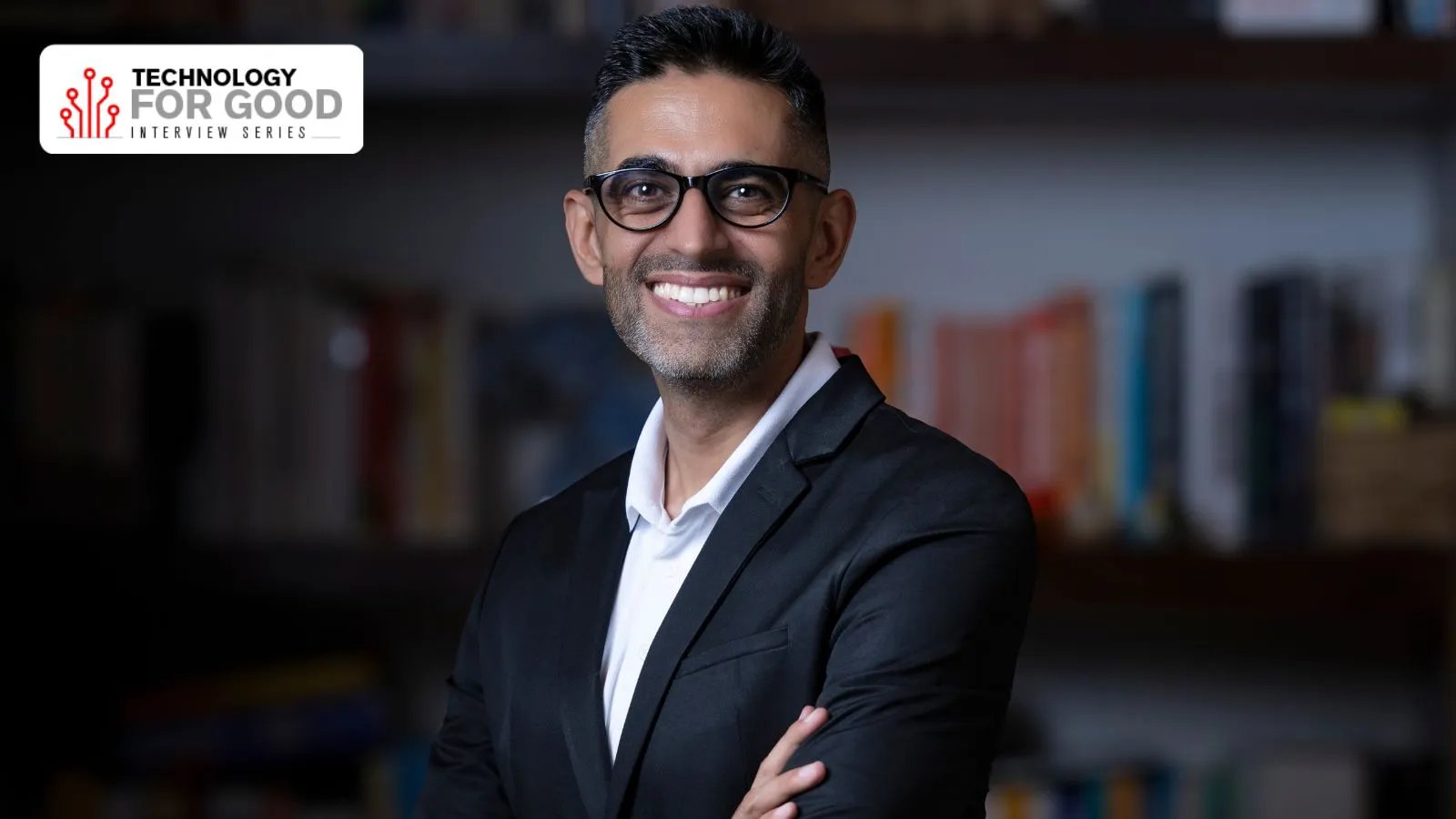

Atul Satija is the founder of TILT, an impact-first venture fund backing early-stage businesses that create economic opportunities in jobs and livelihood domains.
TILT plans to invest across agricultural value chains, MSME productivity and market access, financial inclusion, employability, and climate resilience.
TILT has emerged from the learnings and experience of The/Nudge, a non-profit that works with governments, markets, and civil society to build resilient livelihoods.
Also founded by Atul, The/Nudge has, over the past eight years, supported more than 190 social enterprises and deployed Rs 180 crore through grant funding.
Atul spoke to indianexpress.com about the journey towards TILT, how social enterprises are using technology to increase impact, and the opportunities and the challenges for tech-centric social enterprises. Edited excerpts:
Venkatesh Kannaiah: Give us a brief overview of The/Nudge and your journey towards TILT.
Atul Satija: The/Nudge was founded in 2015, and our work has evolved along two complementary tracks.
We partner with governments to improve economic-inclusion programmes for vulnerable households, and we incubate and accelerate social entrepreneurs in the livelihood ecosystems. We also use grand challenges to discover innovative solutions.
Our portfolio includes 21 Forbes 30 Under 30 founders, three Earthshot Prize winners, and 18 Acumen Fellows and MIT Solve finalists. Non-profits that we incubated are now raising Rs 1,000 crore a year in grants.
Our experience has been that when it comes to issues of community participation, social inclusion, or working with the government on policy, non-profits have an advantage. But when we look at problems that require tech innovation, for-profit social enterprises are better suited to compete.
Better road connectivity in rural areas, affordable mobile phone data plans, UPI, Jan Dhan accounts, and cash transfers have all created new markets for social enterprises. Among those earning Rs 1.5 lakh to Rs 5 lakh a year, social enterprises can create impact through tech and innovation.
Many of the social enterprises incubated by us had raised grants or angel capital but struggled to secure the next round of funding.
TILT is our response to this missing layer of capital.
Venkatesh Kannaiah: Tell us about TILT and what it seeks to achieve.
Atul Satija: TILT is a Rs 250 crore impact-first venture fund backing early-stage businesses that create economic opportunities with a focus on the 140 million households earning between Rs 1.5 lakh and Rs 5 lakh annually.
Our ambition is to back more than 150 startups over 15 years and help improve 100 million lives.
Most VCs understand food tech, but not agriculture. They understand real estate, but not construction. They understand what is around them, but not the original products and services.
We found that in the initial stages, for-profit social enterprises are able to find grants or raise money from friends and family. There is quite a bit of government support too with Technology Business Incubators and Atal Innovation Missions.
So, early funding up to Rs one crore is not an issue. But there is a big gap after it. TILT will issue cheques in the range of Rs 2 crore to Rs 15 crore. We will also not be putting pressure for faster exits and will give them as much time as their business needs.
We have a strong mentor pool in robotics, drones, satellites, on-ground solutions, farm implements, AI mentoring, and cloud support for the enterprises to leverage and scale.
Venkatesh Kannaiah: What are the learnings from your earlier programmes that would help TILT?
Atul Satija: A decade in the social impact sector has given us a lot of expertise. We have built access points into all organisations in India doing social impact in the jobs and livelihoods domain. We have access to organisations looking for capital in this domain, and touchpoints into all colleges, IITs, IIMs, and other institutions.
Farmer Producer Organisations, Self Help Groups, community institutions, tribes, nomadic communities, single mothers, smallholder farmers, marginal farmers, farm labour, construction workers — we understand the space.
We have the flexibility, given the design of the fund, to meet the social enterprises where they are. It is an impact-first fund, and when we are in conflict between impact and return, we will choose impact over return.
We want to support startups without putting pressure to go after higher-income segments. It is easy to make money when you target a rich farmer rather than a smallholder farmer. But staying with the smallholder farmer and growing with them is the key goal.
Venkatesh Kannaiah: Where does tech fit into your idea of impact?
Atul Satija: Technology can dramatically reduce the cost of reaching dispersed customers, increase productivity and transparency, and make solutions available at a scale that purely physical delivery models cannot achieve.
Aadhaar has lowered the cost of identification and verification, while UPI has made instant, low-cost payments widely accessible. Together with smartphone adoption and better physical connectivity, these platforms have made many for-profit models serving low-income communities commercially viable for the first time.
Venkatesh Kannaiah: Tell us about The/Nudge’s work with social enterprises and how they have used tech for creating impact.
Atul Satija: There are quite a few examples. There is S4S Technologies, which uses solar-powered food-processing technology to preserve agricultural produce close to the farm gate. This reduces food waste, improves farmers’ incomes, and creates livelihoods for rural women.
There is EF Polymer, which converts fruit and other agricultural waste into a biodegradable soil conditioner that helps soil retain moisture and reduces the need for irrigation. It won the DCM Shriram AgWater Challenge and has benefited more than 40,000 farmers. Its model addresses water scarcity while converting biological waste into a productive agricultural input.
Karya converts large AI-data projects into accessible digital tasks that can be completed by people in low-income and rural communities. Workers help build high-quality datasets in Indian languages while earning significantly more than prevailing local wages. Karya demonstrates that communities treated merely as sources of data can instead become participants in the AI economy.
Adalat AI uses speech recognition and language models designed for Indian languages and pronunciations to improve judicial workflows. By helping create accurate transcripts and organise court information, it enables judges, lawyers and court staff to work more efficiently and can contribute to reducing case delays.
Venkatesh Kannaiah: Based on your experience with The/Nudge, tell us about areas where tech-based interventions can create an impact.
Atul Satija: Two-thirds of India’s entrepreneurs are now coming from Tier 2 and smaller towns. All of them come from backgrounds with a familiarity with underserved markets. The technology solutions they choose are more rooted in the problems that they understand.
We see five promising areas:
Agricultural value chains: Sustainable agri inputs and practices, affordable mechanisation, post-harvest processing, quality assessment, and digital market linkages can improve productivity, reduce waste, and help farmers receive better prices.
MSME productivity and market access: Simple digital tools can help small businesses manage inventory, formalise operations, improve production, access credit, and reach larger markets. Tech can give small enterprises capabilities that were previously available only to much larger businesses.
Financial inclusion: Aadhaar, UPI and alternative forms of transaction data have created the foundations for lower-cost credit, insurance, savings and cash-flow management. The opportunity is to build responsible financial products suited to irregular incomes and small-ticket transactions.
Employability: AI-enabled learning, assessments, job matching and flexible digital work can connect young people and women to economic opportunities regardless of geography or conventional educational credentials.
Climate resilience: Satellite intelligence, climate modelling, water-management technologies, resilient agricultural inputs and decentralised clean energy solutions can help low-income households and small enterprises adapt to extreme weather. The greatest opportunity lies in solutions that make climate resilience economically beneficial rather than an additional cost.
Venkatesh Kannaiah: Tell us about areas where tech interventions have not worked.
Atul Satija: It is less about sectors where technology cannot work and more about approaches that have consistently underperformed.
App-only solutions without trust or last-mile support have not worked. Expecting low-income users to independently discover, download, and regularly use an app often fails, particularly where digital literacy, connectivity, or trust is limited.
Mere advisories without access have not worked. For example, information for farmers and small businesses has limited value when users still lack affordable inputs, credit, buyers, storage or dependable logistics.
Online training without employment linkages has not worked. Content, videos, and certificates rarely improve incomes on their own. People also need mentoring, predictable earnings, and a connection to real jobs.
Algorithms built on incomplete or biased data have failed. Models used for lending, recruitment, or access to essential services can exclude the very people they are intended to support when informal incomes, regional languages, and local contexts are poorly represented.
Sensors, machines and devices may perform well during funded pilots but struggle after deployment when servicing, spare parts, affordability and local ownership have not been designed into the model.
Venkatesh Kannaiah: Tell us about your Earthshot Prize winners and how they have used tech for creating social impact.
Atul Satija: The Earthshot Prize is a global environmental prize that identifies and supports innovative solutions to the world’s most urgent climate and environmental challenges. The/Nudge ecosystem includes three Earthshot Prize winners.
Takachar was the winner of the 2021 Clean Our Air Earthshot Prize and developed portable technology that converts agricultural and forest residue into valuable bioproducts. By processing biomass close to where it is generated, Takachar can reduce crop-residue burning while creating additional income for farmers.
S4S Technologies, the winner of the 2023 Build a Waste-Free World Earthshot Prize, uses solar-powered dryers and decentralised processing to prevent agricultural produce from being wasted while generating income for farmers and rural women.
Boomitra was the winner of the 2023 Fix Our Climate Earthshot Prize, combining satellite imagery, AI, and ground-level data to measure improvements in soil carbon. This helps small farmers to participate in carbon markets and earn income for adopting regenerative agricultural practices.
Venkatesh Kannaiah: AI and the social sector. What are the opportunities and challenges?
Atul Satija: It has become easier for people to spend time with AI because of its voice-first, chat-first nature to solve problems.
AI can reduce the cost of expertise. Local-language and voice-based tools can make knowledge accessible to people with limited literacy.
We are still some distance away from autonomous drones using AI, autonomous farm implements, and solutions using AI.
This trend will accelerate when AI intersects with robotics for custom use cases in our domain. Whether it is education, health or livelihoods, the impact would be far greater.
AI can improve agricultural and climate advisory, personalise learning, help small enterprises make better decisions and create new forms of flexible digital work.
AI can deepen existing inequalities too. The communities most in need frequently have the least representative data, weakest digital access and lowest ability to challenge an incorrect automated decision.
There is also a livelihood tension. AI can create new work and raise productivity, but it can simultaneously automate many entry-level jobs.