

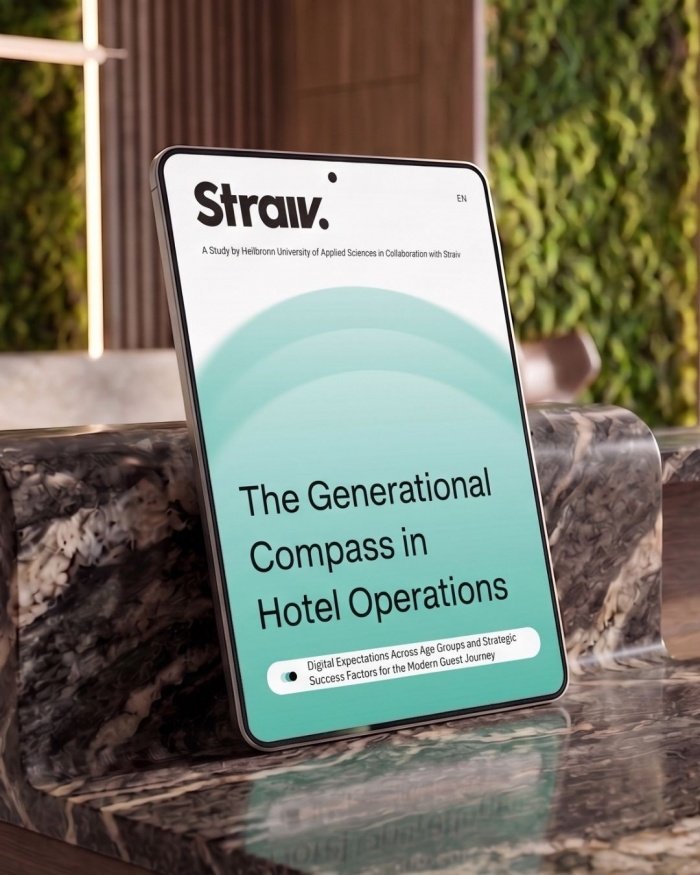


Amid persistent labor shortages and rising operating costs, the hospitality industry faces the challenge of making operational processes more efficient. With the release of its new white paper, “The Generational Compass in Hotel Operations,” hotel technology provider Straiv presents fresh empirical market data on the actual expectations of hotel guests. Based on a representative survey, 154 hotel guests from Germany were systematically analyzed regarding their digital expectations, barriers, and preferences. The findings reveal how differently various age groups rate digital hotel services and highlight their specific requirements for a successful digital guest journey.
High Baseline Acceptance, But Vastly Different Concerns
The study results demonstrate a fundamentally high acceptance of technology across all age demographics: Over 80 percent of respondents have already used digital check-in processes. Nevertheless, more than half express reservations. The underlying reasons vary significantly by generation:
Ages 18 to 35: Their concerns are purely technical: 68 percent of this group fear IT outages and demand flawless, fast mobile-first solutions without requiring an app download.
Ages 36 to 53: 67 percent of this group worry about data privacy and security, yet they show the highest willingness to make digital add-on bookings prior to arrival.
Ages 54 and older: 90 percent of this age cohort fear losing a personal point of contact. While open to digital support for formalities, they value hotel staff as a reliable safety net on site.
Avoiding Overwhelm, Unlocking Time for Service
“Digitalization in the hotel industry must never be seen as an end in itself,” explains Alexander Haußmann, CEO of Straiv. “Guests have long been accustomed to digital self-service in their everyday lives. When we delegate time-consuming routine tasks—such as registration forms and payments—to automated systems, front desk teams regain valuable time. The future belongs to an intelligent symbiosis: technology takes care of administration, allowing humans to focus on interpersonal interactions.”
What Guests Expect: Key Practical Takeaways
The survey findings clearly highlight the primary preferences of guests:
Barrier-Free Access: Guests expect seamless access via web apps rather than native apps to eliminate friction during the booking and arrival process.
Transparent Communication: The middle age group, in particular, places strong emphasis on clear compliance with data protection standards.
Guest-Centric Flexibility: While many travelers value maximum autonomy through fully automated digital processes, others continue to prefer personal availability on site.
Download & Availability
The complete white paper, “The Generational Compass in Hotel Operations,” is available now for download at www.straiv.io.