


From vast wilderness and winding waterways to extraordinary encounters with Africa’s wildlife, Selous Game Reserve has been named Africa’s Leading Tourist Attraction 2026 — a prestigious World Travel Awards title that places one of Tanzania’s most extraordinary landscapes firmly in the international spotlight.
There is a particular kind of magic to places that still feel wild.
Not wild in the carefully choreographed sense of a destination where every encounter is anticipated, but wild in the older, more elemental sense — where rivers dictate the rhythm of the landscape, wildlife moves according to its own timetable and the horizon seems to stretch indefinitely.
In southern Tanzania, Selous Game Reserve is one such place.
Now, the rest of Africa — and increasingly the world — is taking notice.
At the World Travel Awards Africa Gala Ceremony, held on 28 August at the spectacular Diamonds Bijoux Zanzibar, Selous was named Africa’s Leading Tourist Attraction 2026, beating an extraordinary field that included the Pyramids of Giza, Table Mountain, Robben Island, the V&A Waterfront, Botswana’s Okavango Delta and Lake Malawi.
The award is more than another trophy for Tanzania. It is a recognition of a destination whose greatest luxury has always been its sense of space.
Where Africa feels wonderfully untamed
Selous lies in Tanzania’s south, a world away — both geographically and atmospherically — from the better-known safari circuits of the north.
Here, the landscape is shaped by the mighty Rufiji River and its network of channels, lakes and wetlands. Woodlands open into vast plains, while waterways create a constantly changing theatre for wildlife.
It is a landscape made for exploration.
And unlike the postcard familiarity of some of Africa’s more famous destinations, Selous has retained an intriguing sense of mystery.
This is safari without the feeling that you have arrived late to the party.
The reserve’s scale is one of its defining characteristics, giving travellers the rare sensation of being immersed in an ecosystem rather than simply visiting one.
A safari beyond the ordinary
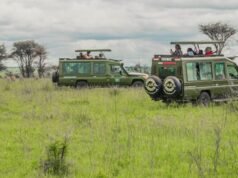
The traditional image of an African safari is often a 4×4 vehicle crossing an endless plain in search of lions, elephants and other members of the Big Five.
Selous offers something broader.
Its waterways open up another dimension of exploration, with boat safaris providing a remarkably intimate way to experience the reserve. From the surface of the water, the landscape takes on a different character: hippos emerge from the shallows, crocodiles lie almost motionless along the banks, while birds fill the trees and skies.
There is something wonderfully unhurried about it.
The boat drifts.
The river moves.
The wildlife carries on with its day.
And suddenly the safari becomes less about finding something and more about simply being there.
That sense of immersion is one of Selous’s great strengths.
A landscape of water and wildlife
The Rufiji River is the reserve’s natural artery, bringing life to an immense ecosystem.
Its channels and lakes create habitats for extraordinary concentrations of wildlife, while the surrounding woodland and grassland provide shelter and feeding grounds for an astonishing range of species.
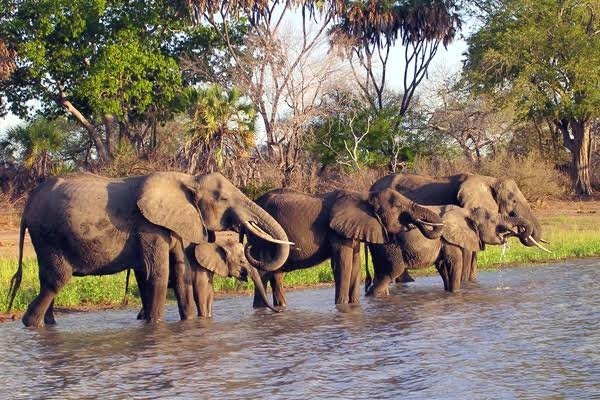
Elephants remain among the reserve’s defining attractions, while hippos and crocodiles dominate the waterways. Lions, leopards and wild dogs add an element of unpredictability to game viewing.
For wildlife enthusiasts, however, it is not simply the famous names that make Selous compelling.
Birdlife is spectacular, particularly around the wetlands and river systems, while the sheer variety of habitats means that every game drive or boat excursion can feel different.
One morning may be spent following elephants through woodland; by afternoon, the focus may have shifted to a family of hippos in a lagoon or an African fish eagle watching from a branch above the river.
The attraction is the variety — and the anticipation of what might appear next.
The romance of the Southern Circuit
For travellers who have already experienced Tanzania’s northern icons, Selous offers another side of the country.
The northern circuit has deservedly become one of Africa’s great safari destinations, but the south offers a quieter, more intimate alternative.
There are fewer vehicles. Fewer crowds. More silence.
And silence is increasingly becoming one of luxury travel’s most valuable commodities.
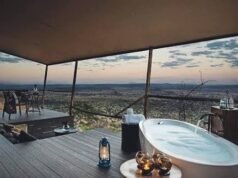
A morning in Selous can begin with the sounds of the bush rather than an alarm clock. Breakfast might be taken beneath the shade of trees before heading out on the river. Afternoons can unfold slowly, perhaps with time at camp before another excursion as the light softens and the temperature falls.
Then comes evening.
The sky darkens.
The sounds of the wilderness become more pronounced.
And somewhere beyond the glow of the campfire, the African night continues entirely on its own terms.
A new chapter for TAWA
The World Travel Awards victory is particularly significant for the Tanzania Wildlife Management Authority, or TAWA, which manages Selous and a number of other important wildlife areas.
According to reports following the ceremony, this was TAWA’s first participation in the World Travel Awards — and it ended with two major victories. Selous claimed Africa’s Leading Tourist Attraction, while Mpanga-Kipengere Game Reserve was named Africa’s Leading Honeymoon Destination.
It represents an important moment for Tanzania’s ambition to broaden the country’s tourism offering beyond its established international icons.
And the timing could hardly be more significant.
Tanzania itself was named Africa’s Leading Destination 2026, while Serengeti National Park won both Africa’s Leading National Park and Africa’s Leading Big 5 National Park. Kilimanjaro National Park was also recognised as Africa’s Leading Mountain National Park.
Together, the awards tell a compelling story: Tanzania is not simply one destination, but a collection of remarkably different experiences.
The appeal of somewhere less discovered
Perhaps Selous’s greatest attraction is that it does not feel as though it is trying too hard.
There are no grand claims necessary.
The landscape speaks for itself.
A herd of elephants moving through the woodland. A crocodile disappearing beneath the surface. A hippo breaking the stillness of the river. A leopard glimpsed for just a few seconds before vanishing into the vegetation.
These are moments that cannot be scheduled.
And that is precisely why they are memorable.
For today’s traveller, increasingly searching for authenticity rather than simply collecting destinations, Selous offers something rare: the opportunity to experience Africa on its own terms.
A destination for the curious traveller
The World Travel Awards recognition is likely to introduce Selous to a much wider international audience.
That will bring opportunities — greater investment, increased awareness and potentially a new generation of travellers discovering Tanzania’s southern wilderness.
But the challenge, as with so many of Africa’s great natural destinations, will be to preserve what makes the place special.
Because the reason Selous has captured the imagination of the World Travel Awards judges is not simply that it contains extraordinary wildlife.
It is the feeling of being somewhere genuinely wild.
Somewhere where the landscape remains bigger than the visitor.
Somewhere where the day’s itinerary can be interrupted by a herd of elephants, a sudden movement in the grass or the appearance of a crocodile along the riverbank.
That unpredictability is the essence of safari.
Tanzania’s wild card
For years, Selous has occupied a slightly mysterious place in the Tanzanian tourism story — known to safari connoisseurs, conservationists and adventurous travellers, but less familiar to the wider international market.
That may now be changing.
Winning Africa’s Leading Tourist Attraction 2026 places Selous alongside some of the continent’s most recognisable landmarks and destinations. It also sends a clear message to travellers: if you think you know Tanzania, there is another chapter waiting to be explored.
And perhaps that is the most exciting thing about Selous.
It doesn’t feel like a destination that has already been discovered.
It feels like one waiting to be discovered properly.
Beyond the famous safari routes, beyond the familiar photographs and well-worn itineraries, southern Tanzania offers a wilderness of rivers, forests, plains and wildlife that remains gloriously unpredictable.
In an age when genuine discovery has become one of travel’s greatest luxuries, Selous has just been handed one of Africa’s biggest invitations to come and see it for yourself.
The wild heart of Tanzania is beating louder than ever.