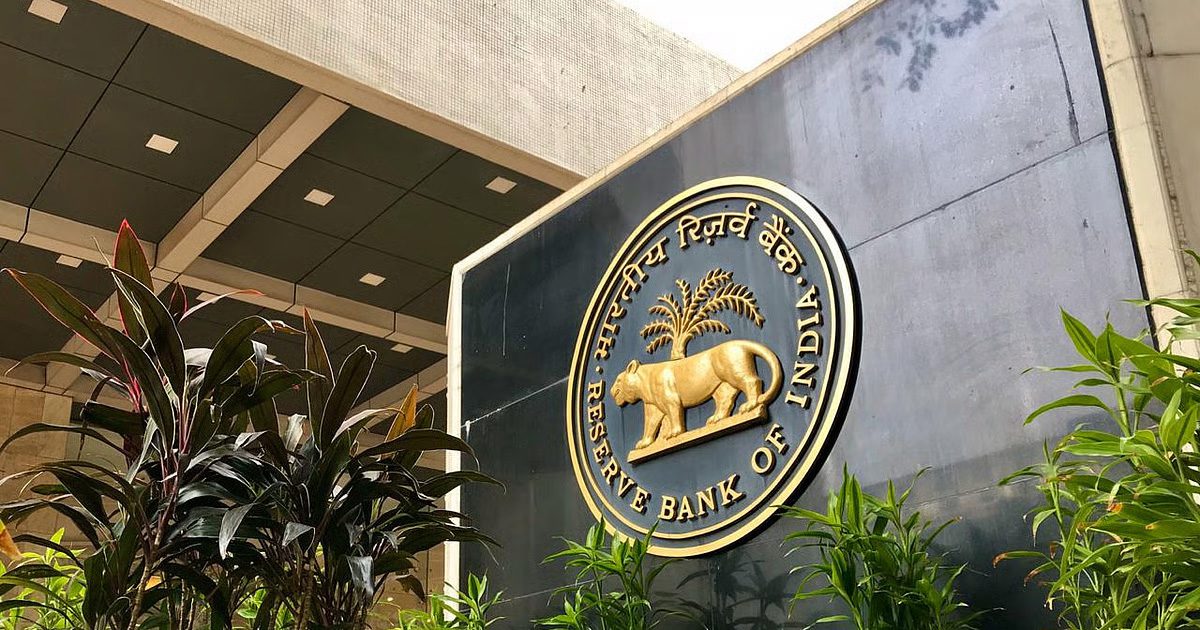

Certain regulations governing banks’ ability to lend money to businesses involved in the stock market, including brokers, clearing members, and securities firms, have been modified by the Reserve Bank of India (RBI). The new regulations will take effect on April 1, 2026. This means the following:
Why Did the RBI Modify the Regulations?
When banks lend money, the RBI aims to ensure that it is safe, secure, and doesn’t put the financial system at risk. In order to decrease hazardous lending, stop loan abuse, and maintain the stability of the financial system, the RBI has strengthened regulations.
Loans Need to Be Completely Guaranteed
In the past, banks occasionally made loans without complete security. These days, all loans to these market companies have to be fully secured by assets, or collateral. Collateral is anything of value held as a guarantee, such as commercial paper, shares, bonds, and gold bonds.
The bank can use this collateral to recoup funds if the borrower is unable to repay.
RBI Corrects Collateral “Haircuts”
When an asset has a haircut, banks will only count a portion of its value rather than its entire worth. For instance, the bank will handle a share worth Rs 60 if its haircut is 40% and its value is Rs 100.
Announcement of haircuts:
40% of shares
AAA bonds are down 15%.
25% of sovereign gold bonds
15–25% for commercial paper
Why get a haircut? thus costs may decrease. Despite a decline in asset value, the RBI wants banks to remain secure.
Banks Need to Continue Examining Collateral
Collateral cannot be accepted by banks once and then forgotten. They have to periodically assess its worth, request additional collateral if it declines, and lower the loan amount if the security is no longer enough.
Brokers’ own trading is not eligible for loans.
Banks can therefore facilitate corporate activities, but not dangerous speculation.
Restrictions on Bank Loan Amounts
RBI has maintained stringent boundaries:
Total capital market exposure is limited to 40% of the bank’s Tier-1 capital.
Maximum direct exposure of 20%
This prohibits banks from investing excessively in loans linked to the stock market.
The Response of Brokerage Firms
On Monday, February 16, shares of BSE Ltd, Billionbrains Garage Ventures Ltd (Groww), Angel One Ltd, and other capital market names experienced a 10% decline.
According to Jefferies, the BSE will be most impacted by the new proprietary trading rules, which may have a 10% effect on the exchange operator’s earnings.
What Professionals Believe
The RBI’s new regulations on banks’ exposure to the capital market will enable lenders to aggressively engage in leveraged buyouts, corporate takeovers, and mergers and acquisitions (M&A), according a report by JM Financial.
According to the research, banks would be able to finance takeover agreements while controlling risks thanks to the new framework. It further stated that only financially sound businesses will be able to obtain bank funding by limiting the capital market exposure (CME) and the debt-to-equity (D/E) ratio upon acquisition.This will lessen the likelihood of financial instability in the banking system by reducing systemic risk.
“We think the new regulations will enable banks to actively engage in corporate takeovers, M&A, leverage buyouts, etc.,” it said. Deeper liquidity should be provided in the interim by increased limits for personal loans secured by securities.
The research claims that these regulations will boost market liquidity and assist businesses in obtaining capital for acquisitions.
These new guidelines were released by the RBI on February 13, 2026. The regulations will take effect on April 1, 2026, or sooner if banks adopt them before then.
The ability of banks to finance up to 75% of the cost when one business wishes to acquire another is one of the major changes. We refer to this as acquisition finance. Only robust and financially secure businesses, though, will qualify.
These businesses need to be profitable during the previous three fiscal years, have a net worth of at least Rs 5 billion, or have a high credit score.
The overall debt of the business following the acquisition shouldn’t exceed three times its own capital. This regulation aims to lower financial risk and make sure businesses don’t take on excessive debt.
Additionally, the RBI has permitted banks to lend more money to individuals against their assets in mutual funds, stocks, exchange-traded funds (ETFs), REITs, and InvITs. The loan is secured by these investments. For individuals, a maximum loan amount of Rs 10 million has been established. Up to Rs 2.5 million of this can be used to purchase stock market shares.
In order to invest in IPOs, FPOs, and ESOPs, banks can also lend up to Rs 2.5 million to individuals. A corporation selling its shares to the public for the first time is known as an initial public offering (IPO).