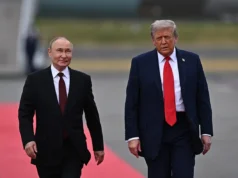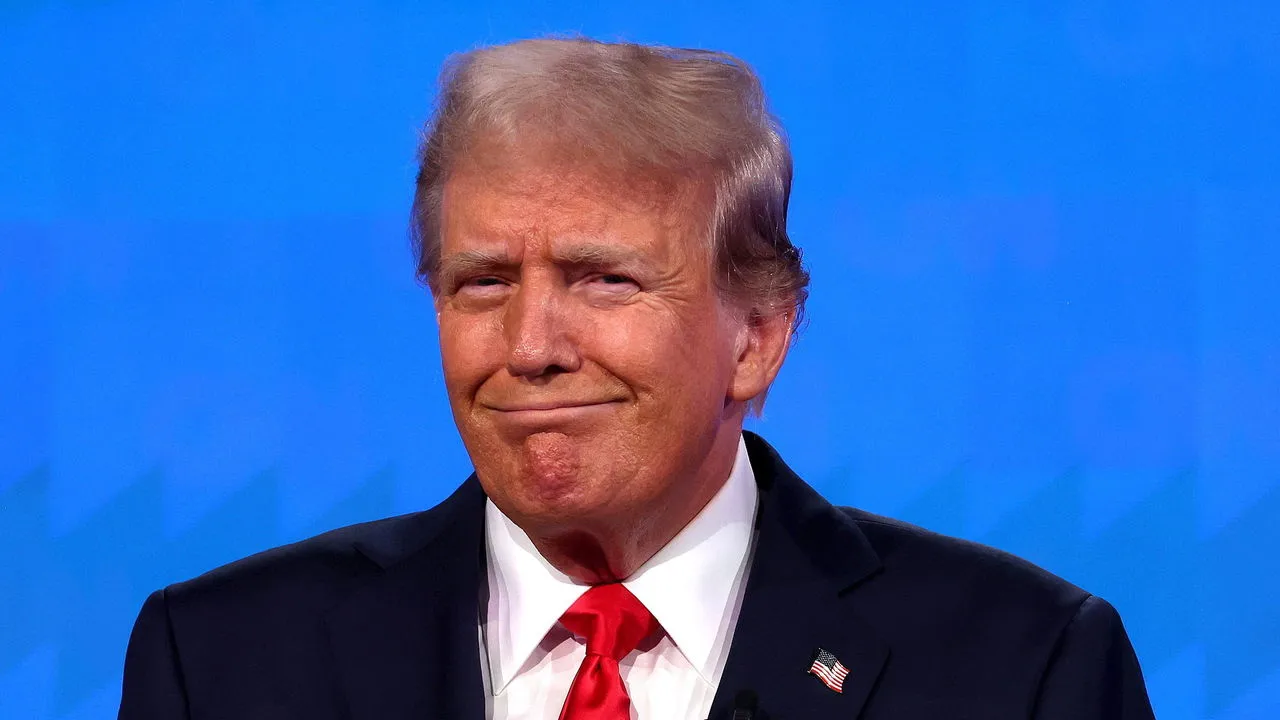

Donald Trump will choose the guests when he invites the Group of 20 to his private golf course in Miami next year.
That much is evident after the US president stated on social media on Wednesday that he will not extend an invitation to South Africa, the G-20 president this year and a longtime target of the US president’s wrath.
Trump has shown that he has no regard for convention or the multilateral order, even if it may be against long-standing etiquette for a leader to choose which of the bloc’s members can attend the summit, much less hold it at their own hotel.
There are now a lot of doubts about who will and won’t travel, including which country might account for the majority. Other G-20 members are faced with a dilemma as a result of the action: either ignore the insult and continue with the trip, or show unity and run the danger of facing the full impact of a Trump reaction in the form of trade penalties, technology embargoes, or worse.
When questioned about Trump’s remarks in Berlin on Thursday, German Chancellor Friedrich Merz stated, “This is one of the most important multilateral forums we still have in the world,” and that “we should not diminish unnecessarily.”
According to Merz, “the American government unnecessarily relinquished influence, including in a part of the world that is becoming increasingly important,” by skipping the meeting held in Johannesburg last weekend.
Officials in South Africa are still worried that the US would try to exclude the nation completely from the group, and the country had been preparing to be barred from the meeting at the Trump National Doral Golf Club. However, as was the case prior to the 2023 summit in India, when the African Union was added as a full member, any change in membership would require agreement among G-20 countries.
Trump’s repeated, unsupported accusations that South Africa was conducting genocide against White Afrikaners set off a rivalry with President Cyril Ramaphosa, which culminated in the US leader’s tantrum. During a visit to the White House in May, Ramaphosa attempted to convince Trump to stop spreading the conspiracy theory, but a video montage that amplified the claims ambushed him.
The way the first African host of the G-20, Africa’s most industrialized economy, was treated exposes the president’s propensity to use the US’s international standing as leverage for domestic political objectives.
In a statement, Ramaphosa’s office said that South Africa “does not appreciate insults from another country about its worth in participating in global platforms,” calling Trump’s remarks “regrettable.”
Merz hinted that they might also be harmful. Washington runs the risk of playing into the hands of China and Russia, two other members of the BRICS group that Trump has dubbed anti-American, by further damaging Washington’s relationship with the nations of the so-called Global South.
According to C. Raja Mohan, a distinguished professor at the Institute of American Studies at O.P. Jindal Global University in India, “China and Russia have an easier time gaining broader support in the Global South because of this bullying of major non-Western states.” “There is nothing to suggest that Trump is eager to reclaim a leadership position in the Global South.”
Although the State Department would probably not grant visas to officials wishing to go, it is unclear how the US might implement Trump’s prohibition on South Africa or any other country’s participation.
In any case, his rhetoric aligns with a more expansive goal of reshaping the world order as he sees appropriate, selecting club members with little consideration for other nations.
Kyiv and its allies were taken aback when the US hinted last week that it would invite Russia back to reorganize the former Group of Eight as part of a 28-point plan to settle the conflict in Ukraine. After Russia was expelled from the G-8 due to its unlawful annexation of Crimea, the group changed its name to the G-7 in 2014.
Poland, which has long demanded membership in the G-20, is another country that could profit from Trump’s favors. In September, Trump extended an invitation to Karol Nawrocki, the newly elected right-wing nationalist president of Poland, to attend the summit in Miami in an undisclosed capacity. He lavished admiration on the relative political rookie and former amateur boxer, whom he had supported in the race.
Poland’s GDP has grown to almost $1 trillion this year, and the country has consistently received praise from Washington for its significant defense spending, mostly on US weapons. In contrast to Prime Minister Donald Tusk, a former president of the European Council and a longtime opponent of Trump, Nawrocki’s credentials are further strengthened by the perception that Poland’s security and future rely in closer connections with Trump’s America rather than Brussels.
This month, Trump told the conservative TV network GB News, “Poland has been great, and the man who won the election is fantastic.”
Ziyanda Stuurman, a geopolitical risk analyst and advisor at Africa Practice located in Cape Town, stated that Trump’s show of contempt for close allies probably portends a “combative and uncooperative stance” throughout the US presidency, regardless of who is chosen for the summit in Miami.
According to Stuurman, the US is using its chair to undermine the efforts made by earlier administrations on matters like equality, health, and climate change. The G-20 summits hosted by Trump “are unlikely to be framed or conducted as meetings between equals, but rather as a platform to showcase what the US believes to be the group’s limited utility for its own ends,” she stated.
According to Bill Emmott, author of “The Fate of the West” and former editor of The Economist, at worst, they would witness a complete disdain for the multilateral world in favor of one where Trump and Chinese leader Xi Jinping set the agenda. During his G-20 presidency, Trump is scheduled to travel to China and meet with Xi in April.
Some people see Trump’s America as “a coercive ex-partner that we cannot live without,” according to Emmott. “But our even bigger nightmare would be if he turned out to favor a G-2 world, one in which far from fighting each other, the US and China decided to carve the world up between them.”