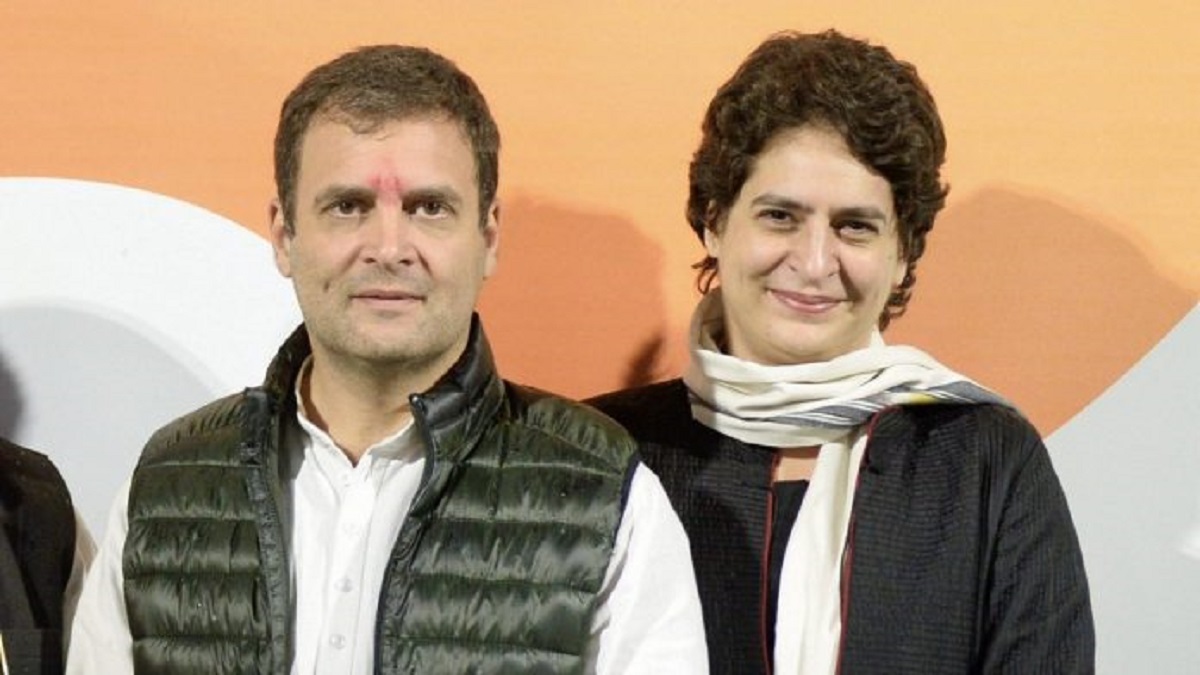

After the Parliament session ended, the customary “Chai pe Charcha” provided an insightful look at the changing dynamics of the Congress party. The Speaker and the Prime Minister are usually seated in the first row, but Priyanka Gandhi Vadra’s presence—sitting in the same row and drinking tea—attracted a lot of attention. She held a prominent position despite being a first-time MP with no official role in the parliamentary party; Supriya Sule and other senior leaders sat behind her. According to sources, Priyanka and Prime Minister Narendra Modi even had a polite discussion on Wayanad, her constituency.
In contrast to her brother Rahul Gandhi, who regularly avoids these casual tea gatherings, Priyanka’s presence—smiling and at ease—indicates a deep awareness of the significance of public appearances and political optics. This comes after she charmingly asked Nitin Gadkari for a meeting to talk about a highway in Wayanad during her widely shared conversation on the House floor the day before. Her ability to negotiate cross-party ties was further demonstrated by the Union Minister’s quick offer for her to stop by his office right after the meeting.
Priyanka has essentially taken over as leader of Parliament after Rahul Gandhi left. She has maintained a high media profile and arrives by 9.30 am every day to make sure her voice is heard. She seems to be leading an inside “big tent” effort, though, going beyond simple presence. She allegedly took the effort to appropriate “rebel” voices like Shashi Tharoor and Manish Tewari, who had previously felt marginalized during discussions like “Operation Sindoor.”According to reports, Priyanka believed that by excluding these seasoned speakers, the party was giving the BJP an advantage. As a result, Tharoor’s isolation appeared to end when he spoke on the VB-G RAM G Bill and participated in demonstrations at the Makar Dwar over the National Herald issue. Tewari also spoke several times on important legislation, such as the SHANTI Bill.
Priyanka seems to support a more inclusive approach to politics, similar to her mother Sonia Gandhi, in order to prevent internal divisions from giving the BJP political leverage. She hasn’t shied away from direct confrontation in the Lok Sabha, challenging the government with a combination of toughness and playful wit and confronting the Prime Minister on delicate subjects like Vande Mataram, which many in her party were afraid to address.
There is an increasing perception inside the BJP that Priyanka poses a more difficult challenge because of her calmness and capacity to hold no long-term grudges, whereas Rahul Gandhi is an easy target for mockery. There have also been rumors of a rekindled relationship with strategist Prashant Kishor (PK), who was respectful of Priyanka despite attacking Rahul Gandhi during his Bihar campaign.It is become more difficult to ignore the rise of two power centers in the Congress as the Winter Session draws to a close. Many party members now believe that Priyanka would be better suited to handle the party’s daily operations and strategic planning while Rahul continues to serve as the face of ideological initiatives. This session’s enhanced resonance could be a sign that she will play a bigger part in the party’s future.