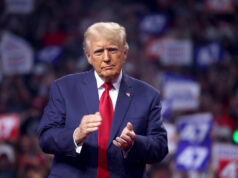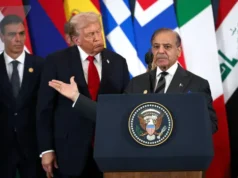

Fears of a new global arms race were sparked by U.S. President Donald Trump’s call for a new nuclear deal on Thursday, February 5, 2026, following the expiration of the previous one with Russia.
Beijing has officially rejected the Trump administration’s repeated calls for a new deal that would include China, whose arsenal is expanding but still far less than that of the US and Russia.
Regarding Russian requests to extend New START, the 2010 deal that placed the final limitations on the two biggest nuclear powers following decades of Cold War agreements, Mr. Trump had remained largely silent.
The deal was signed by former President Barack Obama and extended by Joe Biden. However, just hours after it ended, Mr. Trump said that it was “badly negotiated” and “is being grossly violated.”
On his Truth Social platform, he wrote, “We should have our Nuclear Experts work on a new, improved, and modernized Treaty that can last long into the future.”
White House spokesman Karoline Leavitt responded, “Not to my knowledge,” when asked if Washington and Moscow had decided to adhere to the conditions of the expired START treaty while talks on a new agreement are underway.
As ties with the Biden administration soured, Russia rejected New START inspections.
Due to the expiration of New START, it declared on Wednesday, February 4, 2026, that it was no longer constrained by the quantity of nuclear warheads.
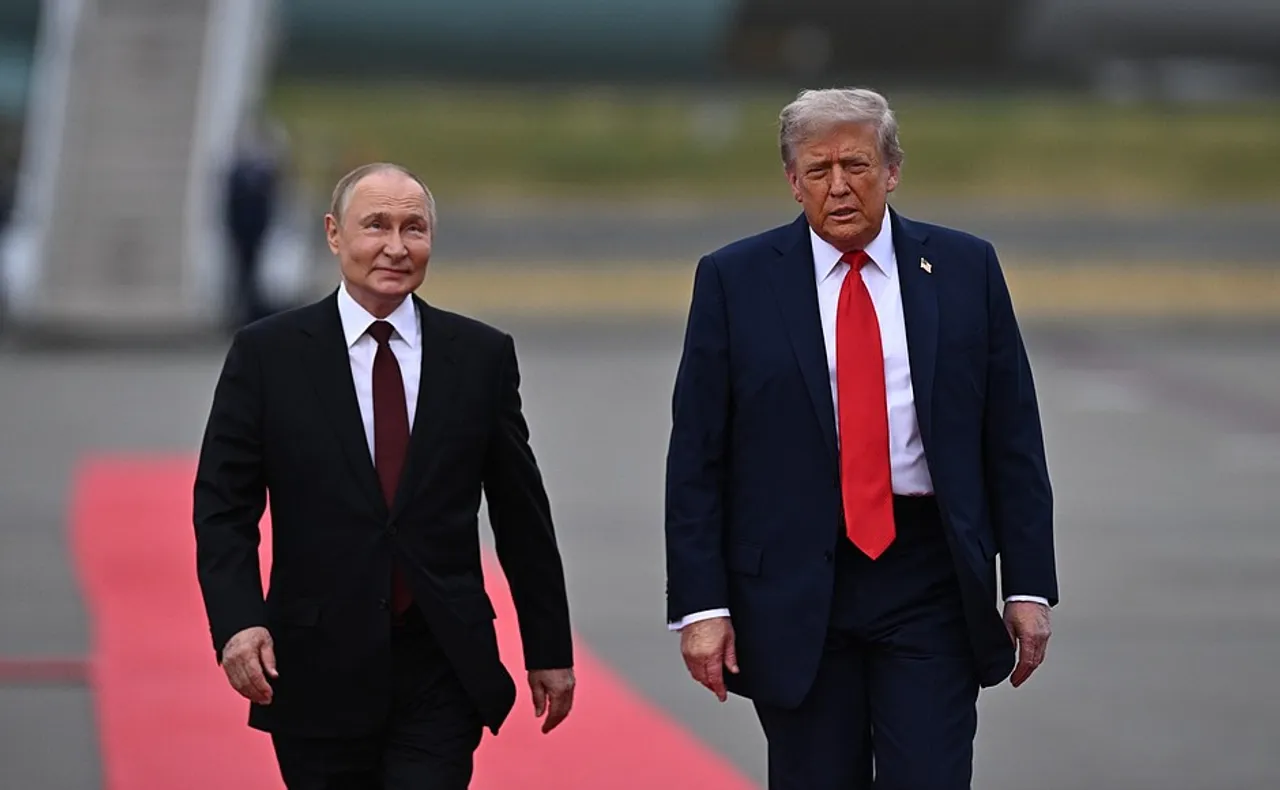
In August of last year, Mr. Trump invited President Vladimir Putin to Alaska and excitedly resumed diplomatic relations with Russia despite the impasse over New START.
Following three-way discussions on the conflict in Ukraine in Abu Dhabi, the United States declared on Thursday, February 5, 2026, that it was starting military talks with Russia again.
Unrestricted nuclear competition
Advocates have called on nuclear states to engage in talks and cautioned that the termination of the New START deal might lead to a worldwide arms race.
In a joint statement on Thursday, February 5, 2026, a group of former senior arms control officials from throughout the world urged the US and Russia to agree to continue adhering to New START’s limitations as a first step.
The demise of New START “will reduce nuclear stability and predictability, threaten global security, and increase the risk of a new era of unconstrained nuclear competition,” they stated.
After more than 50 years, U.N. Secretary-General Antonio Guterres declared that the nuclear agreements between the US and Russia were at a “grave moment.”Following Russian proposals to use tactical nuclear weapons early in the conflict in Ukraine, Mr. Guterres declared, “This dissolution of decades of achievement could not come at a worse time—the risk of a nuclear weapon being used is the highest in decades.”
Speaking on condition of anonymity, a NATO official urged “restraint and responsibility” and stated that the military alliance led by the United States “will continue to take steps necessary” to secure its defense.
However, the official denounced “Russia’s irresponsible nuclear rhetoric.”
China denies the pressure.
U.S. Secretary of State Marco Rubio stated on Wednesday, February 4, 2026, that arms control was “impossible” without China’s participation.
On Thursday, February 5, 2026, China’s Foreign Ministry apologized for the collapse of New START but stated Beijing “will not participate in nuclear disarmament negotiations at this stage.”Lin Jian, the spokesperson for the foreign ministry, told a news conference that China’s nuclear capabilities are completely different from those of the US and Russia.
Together, the United States and Russia possess almost 80% of the world’s nuclear weapons.
The Stockholm International Peace Research Institute estimates that since 2023, China’s nuclear arsenal has increased by over 100 additional warheads annually, more than any other nation.
According to the institute, China is thought to possess at least 600 nuclear warheads, which is far less than the 800 each that the US and Russia were limited to under New START.
Together, treaty-bound U.S. allies France and Britain have an additional 100.
China should get involved, according to Daryl Kimball, executive director of the Arms Control Association, a group that alerts people to nuclear dangers.
nevertheless “there is no indication that Mr. Trump or his team have taken the time to propose risk reduction or arms control talks with China since returning to office in 2025,” said Mr. Kimball.