The Indian Markets: Why Are They Are you falling?
With the Sensex and Nifty intensifying a selloff that has destroyed about Rs 17 lakh crore in market value over six trading sessions, Indian equities continued their decline on Monday, leaving investors facing new uncertainty both domestically and internationally.
In early trading, the NSE Nifty 50 dropped more than 140 points, falling below the 25,550 mark, while the BSE Sensex dropped more than 500 points to a day’s low of 83,043. The Sensex has already dropped more than 2,718 points from its closing high of 85,762.01 on January 2, while the Nifty has dropped about 3%, reaching a low of 25,529.05 during that time.
The market’s worst weekly performance in more than three months was followed by the steep drops, as investor anxiety and volatility increased due to protracted policy overhangs. In just six days, the combined market capitalization of all BSE-listed businesses decreased by almost Rs 16.85 lakh crore to approximately Rs 464.39 lakh crore.
Important elements affecting Indian stocks
1.Trump’s tariffs and the uncertain future of US-Indian trade
Ahead of the domestic earnings season, confidence has been tempered by an elusive trade agreement between the United States and India as well as continuous uncertainty around U.S. tariff policy. The main obstacles, according to analysts, are ongoing policy ambiguity and geopolitical tensions, such as tariff worries, international flashpoints like Venezuela and Iran, and market response to statements made by the U.S. administration. The India volatility index (India VIX) has also increased as a result.
2. Continued FII sales
Pressure on the market has increased due to foreign institutional investors’ relentless selling. In the face of weak mood and unfavorable external cues, FIIs kept selling off Indian stocks, which increased losses and contributed to the liquidity drain.
3. Dimmed worldwide signals
The cautious attitude was exacerbated by weak global signals, and risk appetite was reduced by new worries about the U.S. Federal Reserve’s independence and general macrostress. Early Asian trade saw a decline in European futures as well as a decline in U.S. equities futures due to investor anxiety. Safe-haven flows occurred in bond markets, and when rate drop expectations were factored in, benchmark U.S. Treasury rates began to decline.
All things considered, the sell-off is a result of a convergence of domestic and international issues, from tariff fears and stalled trade discussions to ongoing foreign outflows and weak global market cues, which have a significant impact on investor confidence and caused one of the biggest declines in recent sessions.
4. Funds going to assets that are safe havens
Investors are dumping riskier stocks in anticipation of greater declines as they rush to safe-haven assets amid heightened geopolitical uncertainties.
MCX silver March futures climbed over 4% to reach a new peak of Rs 2,63,996 per kg on Monday morning, while MCX gold February futures increased by more than Rs 2,400, or 1.8%, to reach a record high of Rs 1,41,250 per 10 grams. On Monday, global gold prices crossed the $4,600-per-troy-ounce threshold for the first time.
5. Exercise caution throughout the Q3 earnings season
Investors are on edge as Indian corporations start to release their December-quarter results, particularly in major industries like banking and IT.
This week, a number of well-known figures are expected to report. On Monday, January 12, TCS and HCL Tech will release their Q3FY26 results; Infosys will do the same on Wednesday, January 14. Banking giants HDFC Bank and ICICI Bank will report on Saturday, January 17, while Reliance Industries is scheduled to release its figures on Friday, January 16.
Even while analysts anticipate strong earnings growth for the quarter, any unfavorable surprise might further dampen already tense market mood.
What Do Investors Need to Do?
With benchmark indices falling below critical support levels and selling pressure intensifying following last week’s dramatic decline, technical indicators continue to suggest a gloomy undertone.
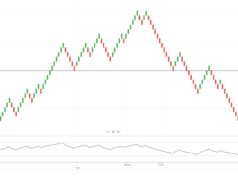
Last week, there was a significant correction in the benchmarks. The market broke below the 20-day Simple Moving Average during this phase, which led to more aggressive selling. The indexes are comfortably trading below short-term averages, which is obviously negative, and a lengthy bearish candle has developed on weekly charts, according to Shrikant Chouhan, Head of Equity Research at Kotak Securities.
As long as the indexes stay below critical levels, Chouhan warned, there are still downside possibilities. “The weak structure is anticipated to persist as long as the market trades below the 50-day SMA, or 26,000 on the Nifty and 84,900 on the Sensex. 25,600 on the Nifty and 83,700 on the Sensex will serve as quick support on the decline. With the next targets around 25,400–25,300 on the Nifty and 83,100–82,800 on the Sensex, a violation of these levels might hasten selling, he warned.
“A move above 25,750 on the Nifty and 84,200 on the Sensex could trigger a pullback towards 25,850–25,900 and 84,500–84,700, respectively,” Chouhan continued on the upside. He emphasized that traders should keep an eye on the 20-day SMA close to 59,500 for Bank Nifty.
Technical Research Analyst Aakash Shah of Choice Equity Broking Private Limited recommended traders to maintain discipline and selectivity.
Shah advised traders to take a range-bound strategy, favor strong stocks during dips, and wait for obvious breakouts before taking aggressive positions in light of the current situation.