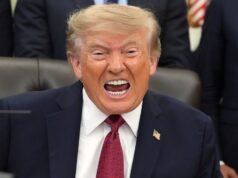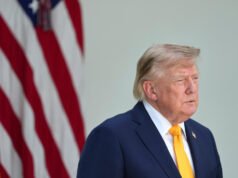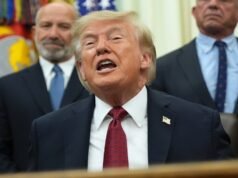


After US President Donald Trump, China has claimed credit for mediating peace between India and Pakistan during the military conflict earlier this year, despite New Delhi’s pushback, which has repeatedly rejected any third-party mediation. Like Trump, the Chinese Foreign Minister also projected Beijing as a peace negotiator for other global conflicts, including tensions in northern Myanmar, between Cambodia and Thailand, and the Iranian nuclear issue.
More local hostilities and international conflicts broke out this year than at any other point since the end of World War II. Speaking at the Symposium on the International Situation and China’s Foreign Relations in Beijing, Foreign Minister Wang Yi stated, “Geopolitical turbulence continued to spread… To build peace that lasts, we have taken an objective and just stance and focused on addressing both symptoms and root causes.”
“Tensions between India and Pakistan” was one of the hotspot issues “mediated” by China this year, according to Wang Yi.
He asserted, “We mediated in northern Myanmar, the Iranian nuclear issue, the tensions between Pakistan and India, the issues between Palestine and Israel, and the recent conflict between Cambodia and Thailand in accordance with this Chinese approach to resolving hotspot issues.”
India’s Position on a Ceasefire
New Delhi has insisted that direct negotiations between the DGMOs (Director General of Military Operations) of the two nations’ forces ended the military confrontation between India and Pakistan, which began on May 7.
“Regarding ceasefire and what sort of role other countries played, etc.,” the Ministry of External Affairs stated during the press briefing on May 13. As you can see, the DGMOs of the two nations hashed out the precise date, time, and text of the agreement over the phone on May 10, 2025, starting at 15:35.
Additionally, India has continuously maintained that any third-party engagement in issues pertaining to India and Pakistan is inappropriate.
China’s Part in Tensions Between India and Pakistan
China’s role in the May 7-10 Operation Sindoor came under serious scrutiny and criticism, especially the military assistance provided by Beijing to Islamabad.
On the diplomatic front, Beijing called on India and Pakistan on May 7, asking both nuclear-powered nations to exercise restraint even while expressing regret over India’s airstrikes.
“China finds India’s military operation early this morning regrettable,” said a Chinese Foreign Ministry statement, reacting to questions on India’s airstrikes and escalating tensions between India and Pakistan.
In an apparent allusion to the terrorist incident in Pahalgam, the statement stated, “China opposes all forms of terrorism,” without mentioning Pakistan. It also called on both parties to use moderation for the sake of peace.
However, Beijing and Islamabad’s tight connections have a detrimental effect on their relations with New Delhi, as seen by China’s direct military backing for Pakistan during Operation Sindoor.
China, whose arms supplies account for more than 81% of Pakistan’s military equipment, attempted to minimize India’s claim that Beijing exploited the conflict as a “live lab,” refusing to explicitly address the accusations made by Lt Gen. Rahul R. Singh, Deputy Chief of Army Staff.
According to Gen. Singh, China’s approach during Operation Sindoor was based on its antiquated military tactic of “36 stratagems” and using a “borrowed knife” to murder the enemy in order to promote Beijing’s desire to inflict suffering on India.
What China Said About India-China Relations
Wang Yi highlighted Beijing’s invitation to Prime Minister Narendra Modi to attend the Shanghai Cooperation Organization (SCO) summit in Tianjin in August of this year while discussing China’s foreign policy initiatives.
We asked North Korean and Indian leaders to visit China this year. He added that the SCO summit was a huge success and that “China-India relations showed good momentum and the traditional friendship with the DPRK (Democratic People’s Republic of Korea) was cemented and further promoted.”
According to the Foreign Minister, China’s relations with its neighbors have moved into a new phase of creating a community with a common future more quickly.
Regarding US Tariffs
Wang Yi stated, “This year, economic globalization met serious setbacks,” seemingly alluding to US President Donald Trump’s unilateral tariffs against China and other nations. The global economic order was upended and international trade regulations were severely damaged by the tariff war. It became crucial to choose between isolation and openness.
He emphasized that the US-China relationship is among the most important bilateral ties in the modern world.
“The strategic choices of the two countries will shape the course of world history,” he stated.
We took strong, unambiguous stances on important matters of principle. We responded forcefully and maintained our position on matters pertaining to China’s fundamental interests,” he stated.
In order to seek cooperation, promote a more logical, objective vision of China, and resolve disagreements through consultation and communication, we simultaneously engaged and spoke with the US, he said.
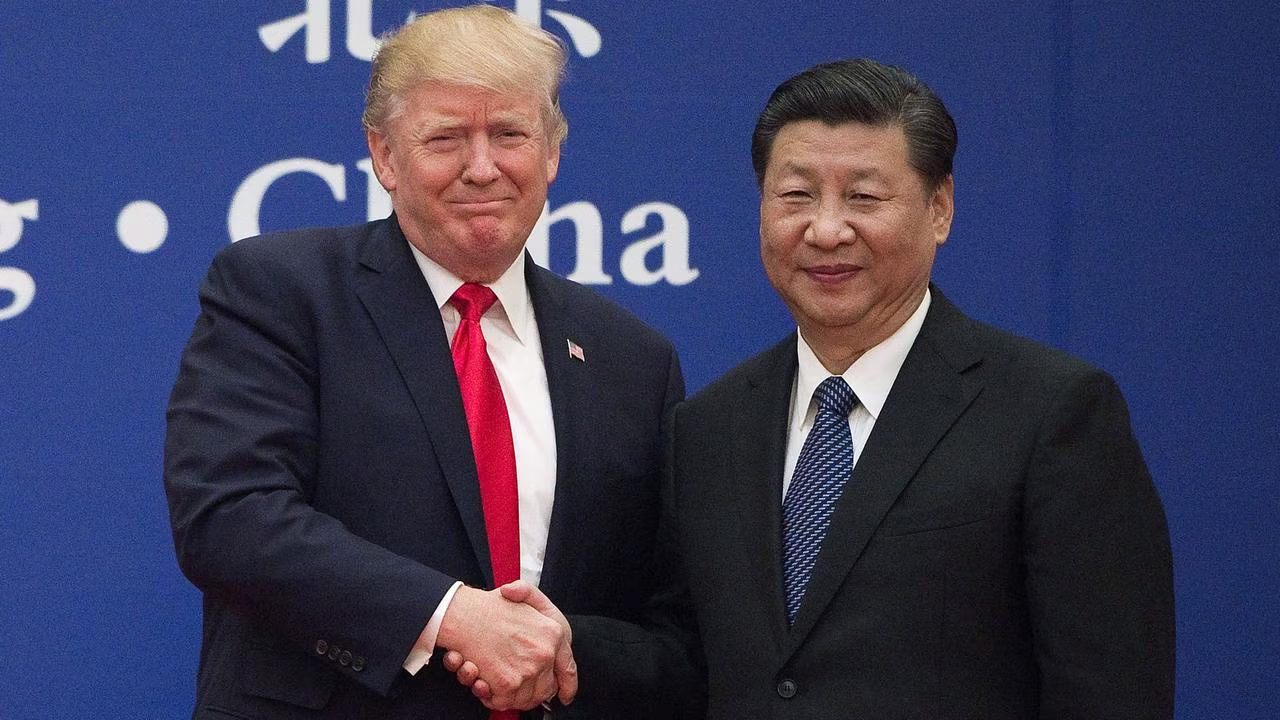
He said that the numerous exchanges between Trump and Chinese President Xi Jinping have “guided the giant ship of China-US relations through troubled waters and steered it in the right direction.”
In order for the two big nations to get along, China and the US must find solutions to their separate problems based on equality, respect, and reciprocity.