
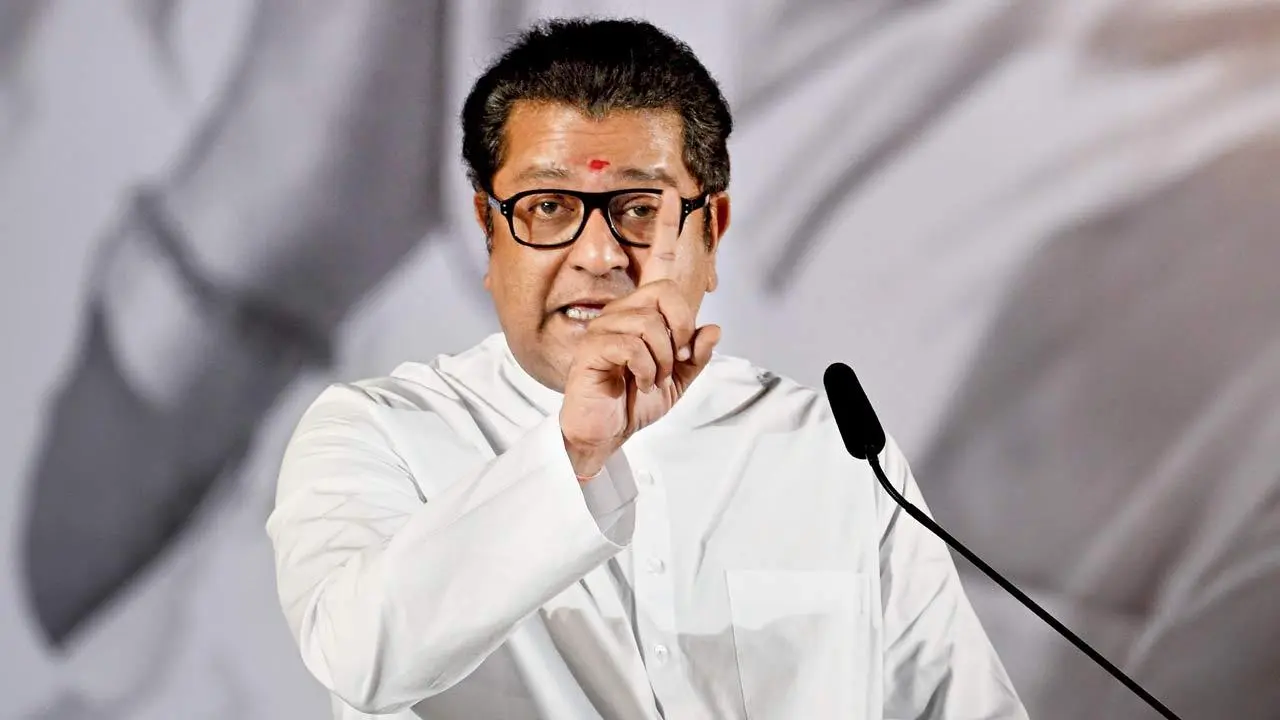

For the past thirty years, Raj Thackeray has been a significant player in Maharashtra politics. He frequently makes headlines during election seasons and is well-known for his oratory abilities. But his political significance was being questioned after his party, the Maharashtra Navnirman Sena (MNS), suffered a crushing defeat in the assembly election.
He and his cousin Uddhav Thackeray announced their partnership last Wednesday.
Let’s examine the events that caused Raj Thackeray to collaborate with Uddhav Thackeray, his bitter competitor up until a year ago.
After winning 13 seats in its first assembly election in 2009 and posing a serious threat to the Shiv Sena, which was run by his cousin Uddhav Thackeray, the MNS is now essentially nonexistent.
What then went wrong with Raj Thackeray?
Here are three main explanations based on years of studying his political career and talking to his close associates:
Inconsistency in Ideology
Raj Thackeray decided to support the Marathi cause when he left the Shiv Sena in 2005 and started his own party the following year. Driving out “outsiders” who were supposedly stealing jobs from natives and damaging Marathi culture in movies, FM radio, and store signage was the main goal of the MNS agenda. Following a bold comment that led to his imprisonment in 2008, his outbursts against people from north India garnered headlines and even sparked riots. He avoided communal politics, insisting that his only loyalty was to “Maharashtra Dharma.”
But he changed course in January 2020 and made Hindutva the party’s doctrine. He played the Hanuman Chalisa in protest of mosque loudspeakers and swapped out the party’s multicolored flag for a saffron one. Similar to how Bal Thackeray was referred to as “Hindu Hriday Samrat,” his fans were instructed to refer to him as “Hindu Jana Nayak.” He has once more reverted to his anti-Hindi and anti-North Indian position in front of the Brihanmumbai Municipal Corporation (BMC). Voters were offended by this ideological reversal because they found it difficult to reconcile it with his previous position.
Not Gaining Knowledge from Errors
Raj Thackeray has had mixed feelings about Prime Minister Narendra Modi. After visiting Gujarat in 2011, he gave PM Modi high marks. He declared his support for him during the 2014 Lok Sabha elections while simultaneously fielding MNS candidates in seats held by Shiv Sena, an ally of the BJP. The MNS lost every seat as a result of this inconsistent strategy.
During his rallies in 2019, Thackeray adopted an anti-Modi posture and accused PM Modi of hypocrisy using video footage. He claimed that PM Modi’s bullet train project favored Gujarat over Maharashtra, which is why he opposed it. However, Shiv Sena (UBT) leader Sanjay Raut claimed that Thackeray ceased criticizing PM Modi after being called by the Enforcement Directorate (ED). He went on to promise PM Modi “unconditional support” for the Lok Sabha elections in 2024.
According to MNS General Secretary Vageesh Saraswat, the party’s uneven strategy was also visible in the assembly elections of 2024. “If you are saying that Mahayuti will come to power and Devendra Fadnavis will become the chief minister, why would people vote for MNS candidates?” he responded.
Many political analysts think that voters are confused about Thackeray’s goals and vision because of his repeated reversals.
Unusual Choices
Political parties in a democracy want to win elections in order to gain power. However, Thackeray declared that his party was running for opposition seats prior to the 2019 assembly election. Both the general public and political analysts were perplexed by this. Why would voters choose a party that publicly stated it had no desire to build or participate in a government?
People usually vote for parties they think can solve their problems by entering the government, hence such remarks damaged the party’s reputation.
What Comes Next
Following the disastrous assembly election, many analysts had written off Raj Thackeray from Maharashtra’s political landscape. He still has a potential, nevertheless, to become relevant again in the next elections for local bodies, including the BMC. Six of the seven corporators that the MNS was able to win in the most recent BMC elections defected to the Shiv Sena.
Only when the poll results are announced on January 16, 2026, will it be apparent if Raj Thackeray can make a political comeback or if the MNS is doomed.