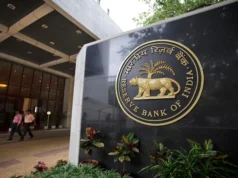
The Reserve Bank of India (RBI) is expected to host its Monetary Policy Committee (MPC) meeting from December 3-5. While analysts remain divided on their views of whether the Indian central bank will cut rates this time or not, market professionals have predicted what the impact might be on Indian stock markets.
Earlier during its last meeting, RBI agreed to leave the benchmark repo rate steady at 5.5 percent on October 1 for the second time in a row. RBI’s MPC reduced rates by a total 100 basis points in the first half of 2025, but maintained a pause since August.
On October 1, markets closed higher following the announcement of MPC’s decision by RBI Governor Sanjay Malhotra. The Nifty 50 finished the session 225 points higher (more than 0.9 percent) at 24,836 on October 1, while the Sensex gained more than 700 points (about 0.9 percent) to close at 80,983.31.
Expectations for an RBI rate cut:
Sanjay Malhotra, the governor of the Reserve Bank of India (RBI), stated earlier in November that policy interest rates could be further lowered. “It was made quite plain at the most recent MPC meeting in October that policy rates might be lowered. In an interview with Zee Business, he stated, “Since then, the macroeconomic data we have received has not indicated that the room to lower rates has decreased.”
He added, temporarily igniting expectations for a rate drop, “There is certainly room (to lower rates), but whether the MPC takes a call on that in the coming meeting or not depends on the committee.” After the Governor’s remarks, analysts started to predict a rate drop of 25 basis points.
The RBI was projected to decrease rates by 25 basis points to 5.25 percent on December 5, according to a Reuters poll.
The MPC confronts a tough act at the December rate review, with the mix of a robust GDP print and record low inflation, said Radhika Rao, Executive Director and Senior Economist at DBS Bank. “We expect an emphasis on forward looking growth guidance and high real rate buffer due to weak inflation, to justify a move to lower rates further,” she added.
Let’s examine many possible outcomes of the RBI’s MPC decision and how the markets might respond to each:
What if RBI gives a rate cut:
If the RBI agrees to decrease rates in the upcoming MPC meeting, it would act as a powerful short-term boost for Indian equities, Garg added. “A rate cut lowers borrowing costs for both consumers and corporations, promoting credit expansion, enhancing profit visibility, and increasing system liquidity. In the past, these easing periods have encouraged investors to take on more risk, which has benefited rate-sensitive industries like real estate, automobiles, and finance,” he continued.
According to Garg, the effect will be particularly favorable for banking stocks since faster balance-sheet expansion will result from increased loan demand as credit becomes more affordable. However, if lending rates change more quickly than deposit costs, banks may experience marginal compression in their net interest margins (NIMs). Despite that, in a climate of steady asset quality and rapid loan growth, the impact on profitability tends to be limited, and valuations remain well-supported,” the analyst said.
A rate decrease by the RBI, according to Siddharth Maurya, Founder & Managing Director of Vibhavangal Anukulakara, might bring in a new round of gains for Indian stocks as the markets rise due to lower borrowing costs, improved corporate margins, and more investor demand.
Ravi Singh, Chief Research Officer at Master Capital Services, said that a 25 basis points cut would align well with the government’s broader economic agenda and would complement other positives initiatives like GST rationalisation, capital expenditure, and ongoing incentive-led domestic manufacturing.
According to Anil Rego, Founder and Fund Manager at Right Horizons, a rate drop by the RBI would probably be interpreted as a strong pro-growth signal, particularly in light of excellent GDP figures and noticeably lower inflation. “A reduction in borrowing costs typically boosts risk appetite, and markets could respond with a broad-based rally led by rate-sensitive sectors such as banking, autos, real estate and consumer durables,” he stated.
After months of cautious foreign positioning, lower yields would make stocks comparatively more appealing, possibly leading to fresh FPI inflows. A change toward softer policy would help alleviate financial conditions for corporates, encourage credit expansion and strengthen prospects of an extended domestic capex cycle. Markets may interpret a rate drop as confirmation that the RBI is comfortable fostering the next phase of the economic expansion, he continued, since liquidity is improving and confidence in India’s medium-term growth path is growing.
“Markets should react favorably if the RBI cuts interest rates by 25–50 basis points since lower borrowing costs boost credit demand and increase earnings visibility. While a 50 bps increase would serve as a larger stimulus for cyclicals and wider stocks, a 25 bps drop would provide a slight boost. For banks, cuts may initially compress margins, especially for PSU lenders, but stronger loan growth and fee income often balance this,” said Ajit Mishra – SVP, Research, Religare Broking Ltd.
According to Shravan Shetty, Managing Director of Primus Partners, “if the MPC is proactive and raises the rate, it will help signal growth focus and also help reduce the cost of funding, which is good given that private spending is picking up.” “Any rate cut will also aid banks as they negotiate the margin stress. This, coupled with other liquidity measures, will help banks fund capex growth and boost profits,” he added.
InCred Money Team claimed that a rate cut ould create a short-term rally, as lower borrowing costs normally stimulate consumer spending and lift overall demand across the economy.
What if RBI holds rates:
If the Indian central bank chooses to hold rates this time, the markets are unlikely to react badly, according to Garg. He pointed out that a delay would assist banks keep good spreads and show confidence in the growth trajectory. According to Garg, “either scenario points to continued market resilience—a hold ensuring stability and a rate cut offering a short-term boost.”
Anil Rego also remarked that markets are unlikely to read a no-rate cut decision adversely, since policy continuity could be seen as a show of prudence rather than hesitancy. “A halt would reflect the central bank’s determination to examine the impact of past easing and ensure inflation is firmly anchored before committing to additional measures. In this situation, shares may trade in a limited range but stay supported by robust GDP statistics, resilient profitability and growing domestic flows,” he said.
Singh meanwhile stated that if the RBI decides to maintain rate and defer rate cut, markets will generally take it as the central bank’s attempt to analyze incoming data more carefully, which will still be considered as a responsible, stability-first position.
Consolidation with pockets of opportunity could be anticipated in the event of an MPC hold, with speculation-driven equities underperforming and high-quality companies with steady cash flows commanding premium price. In summary, a hold would cause markets to become selective, but rate cuts would cause a widespread bounce, according to Maurya.
“If the RBI holds rates, the market may see it as a signal of caution, resulting in a more muted reaction. According to Religare Broking’s Ajit Mishra, “banking stocks would see stable margins but slightly softer growth expectations until clearer guidance emerges.”
“If the RBI does hold rates, investors are unlikely to view it negatively. On the contrary, such a decision would probably be seen as a prudent balancing act, acknowledging strong growth while guarding against inflation upside. In that scenario, markets will likely shift their focus from the near-term rate decision to the broader trajectory: when the rate-cut cycle might actually begin, and how quickly those cuts feed through to banks, businesses, and borrowers,” stated the InCred Money Team.