


At 9:04 p.m. on the eve of his testimony, US Navy Vice Admiral Richard Correll’s dreams of having a simple confirmation hearing to take over as head of America’s nuclear forces were undoubtedly dashed.
The world was surprised when President Donald Trump declared on social media that he had ordered the US military to “start testing our Nuclear Weapons” because he believed that the US could not lag behind China and Russia.
China is far behind Russia in second place, but it will catch up in five years, Trump claimed.
Correll was repeatedly questioned about Trump’s remarks by perplexed US lawmakers during a nearly 90-minute hearing at the Senate Armed Services Committee on Thursday morning. This uncertainty reflected the chaos the Republican president created in Washington and beyond.
Senator Jack Reed, the committee’s top Democrat, questioned Correll on whether a global nuclear arms race would be sparked by a return to US nuclear explosive testing.
My job, if approved as STRATCOM commander, would be to advise the military on any future testing-related conversations,” Correll stated.
Trump nominated the vice admiral in early September to head the US military’s Strategic Command, or STRATCOM, which focuses on strike capabilities and nuclear deterrent. Throughout the session, the vice admiral continued to provide thoughtful answers to questions.
At one point, independent Senator Angus King questioned whether Trump’s post could be about testing missiles or other delivery systems instead of testing nuclear bombs explosively.
I don’t know what the President is trying to say. That might be an interpretation, I agree,” Correll remarked.
The United States of America
In a move that evoked fearful Cold War memories, US officials on Thursday failed to make clear whether Trump was calling for testing of nuclear weapon delivery systems or lifting a 33-year ban on explosion tests, which experts said would be disruptive and run the risk of inciting rivals to escalate.
According to Vice President JD Vance, testing is a necessary component of making sure the US nuclear arsenal operates as intended.
To keep their arsenals ready, the US and other nuclear-armed nations have long since ceased detonating real nuclear bombs in favor of sophisticated computer simulations.
“There is no good reason for the United States to resume explosive nuclear testing – it would actually make everyone in the US less safe,” stated Tara Drozdenko, who is Union of Concerned Scientists’ director of the global security program.
“The US has so much to lose and so little to gain from resuming testing,” she stated.
SENDING A MESSAGE TO MOSCOW AND BEIJING
According to numerous commentators, Trump was probably trying to send a message to Beijing and Moscow, as he frequently attempts to project power as a negotiating strategy.
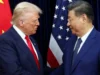
Prior to his meeting with Chinese President Xi Jinping in South Korea, the president said on social media that he had given the Pentagon instructions to begin testing “on an equal basis” and that “that process will start immediately.”
The last nuclear test explosion this century was carried out by North Korea in 2017.
Although it hasn’t carried out a full-scale nuclear explosion, Russia has tested two new nuclear-powered weapons in recent days and has been accused by Washington of conducting so-called low-yield tests and lacking transparency in its nuclear program.
According to a Kremlin official on Thursday, Russian President Vladimir Putin had warned that Moscow would test a nuclear weapon if any other nation did.
Throughout several U.S. administrations, China has consistently rejected attempts to hold nuclear armament talks. Although Beijing is working to significantly expand its nuclear weapons arsenal, it has shown little interest in engaging in negotiations with the US and Russia, claiming their nuclear arsenals are currently far more powerful.
James Acton, co-director of the Carnegie Endowment for International Peace’s nuclear policy program, stated, “I think that’s unlikely to work if the goal is to generate leverage to force China to negotiate.”
Beijing’s foreign ministry stated Thursday that China expects the United States will uphold its duties under a test prohibition treaty and its commitment to a nuclear testing moratorium.
BENEFITING US ADVERSARIES
According to Ploughshares, a foundation dedicated to lowering nuclear dangers, lifting the ban on US nuclear testing might help Washington’s nuclear adversaries by enabling them to carry out additional tests.
The bulk of all nuclear test explosions have been carried out by the United States, which also keeps records of its 1,030 tests since 1945.
In January, the US military’s nuclear arsenal was confirmed by STRATCOM, of which Correll is currently No. 2.
In a statement, Ploughshares warned, “A return to testing will help US adversaries catch up in nuclear research and weapons development.”
Any test would take place deep underground at a Nevada site, which must be prepared to undertake testing within 36 months, according to a Department of Energy source who spoke on condition of anonymity.
Senator Jacky Rosen stated at the hearing that Nevada, her home state, had suffered as a result of the United States’ 1951–1992 nuclear explosives testing and promised to stop Trump from starting them again: “I will be quite clear: I will not allow this to occur. Not when I’m watching.”